


 Dubai Tourist Visa
 China Tourist Visa
 South Korea Tourist Visa
 Japan Tourist Visa
 Taiwan Tourist Visa
 Hong Kong Tourist Visa
 Golden Visa UAE
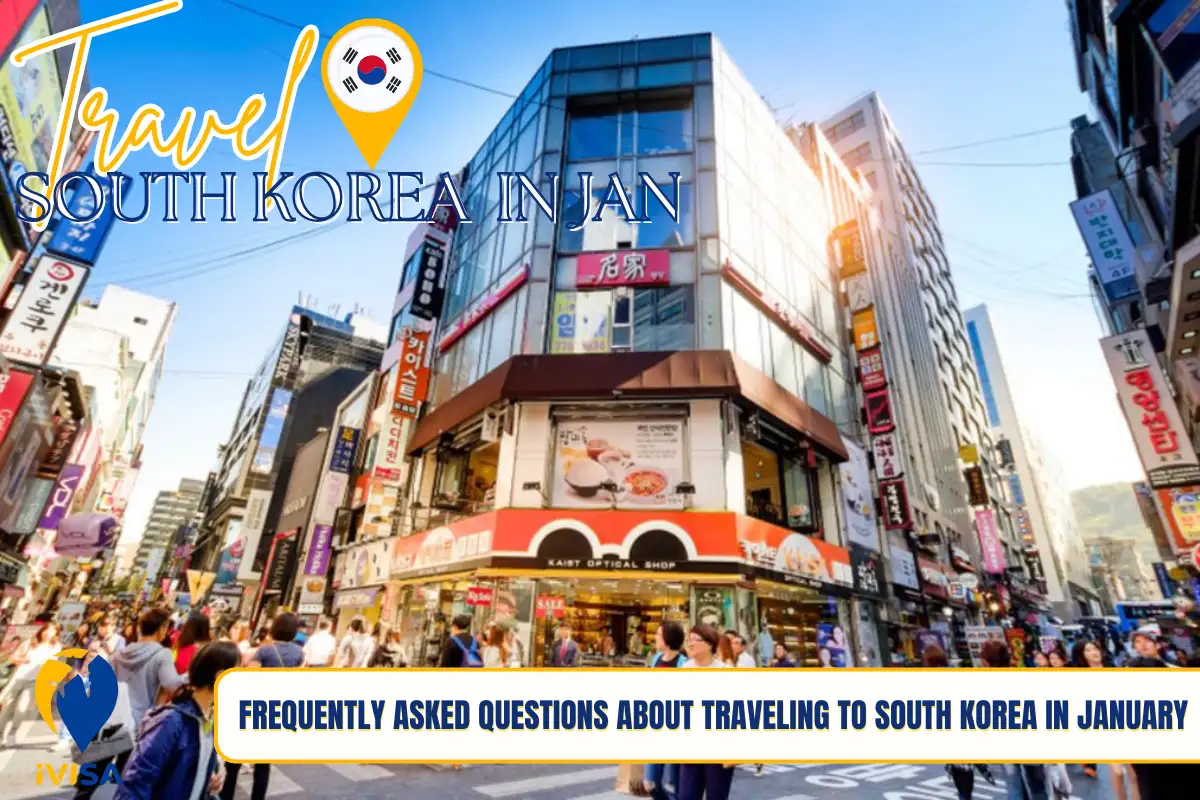
The weather in South Korea in January can drop to -4°C, yet it still attracts millions of visitors each year thanks to its stunning scenery. So, what about you? Would a Gen Z traveler be ready to take a trip during this cold season? Let’s explore together with iVISA!
Should You Travel to South Korea in January?
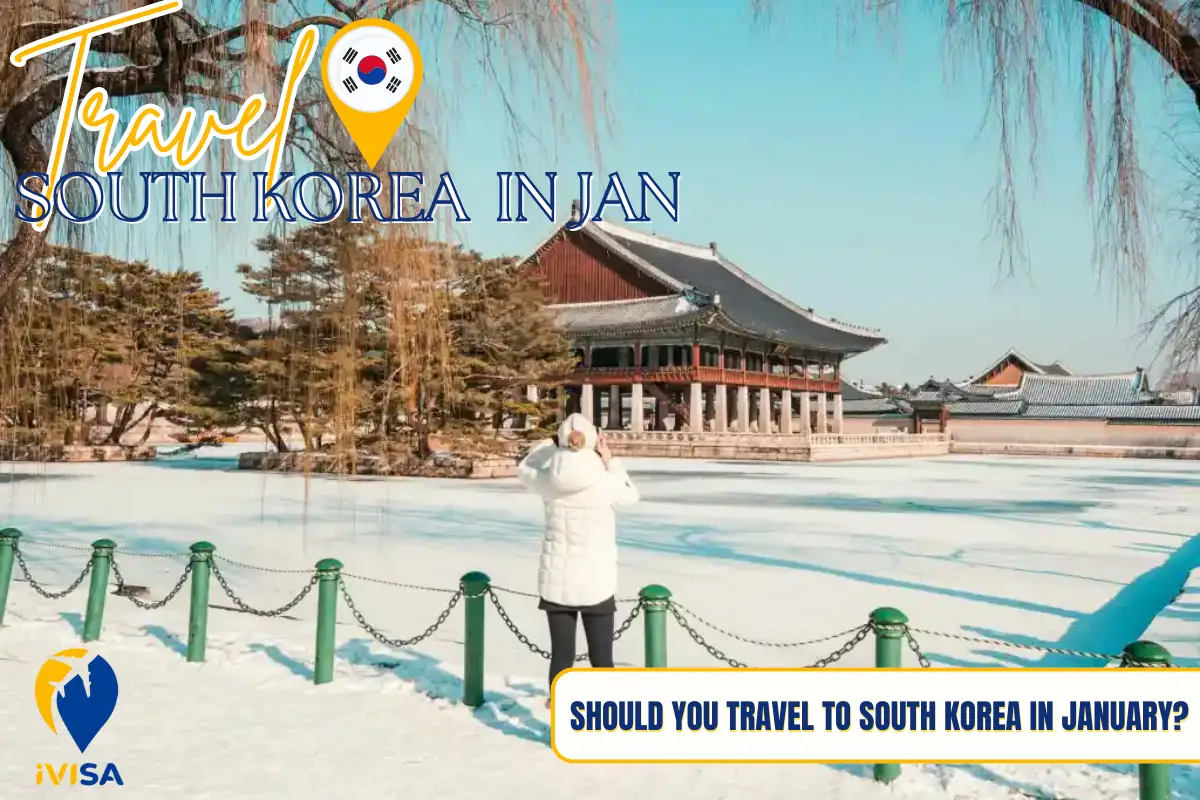
When you consider whether to travel to South Korea in January, your biggest concern is usually the weather and the actual experience. During the entire year, January marks the deepest winter, but it’s also the month that most clearly shows Korea’s distinctive winter atmosphere.
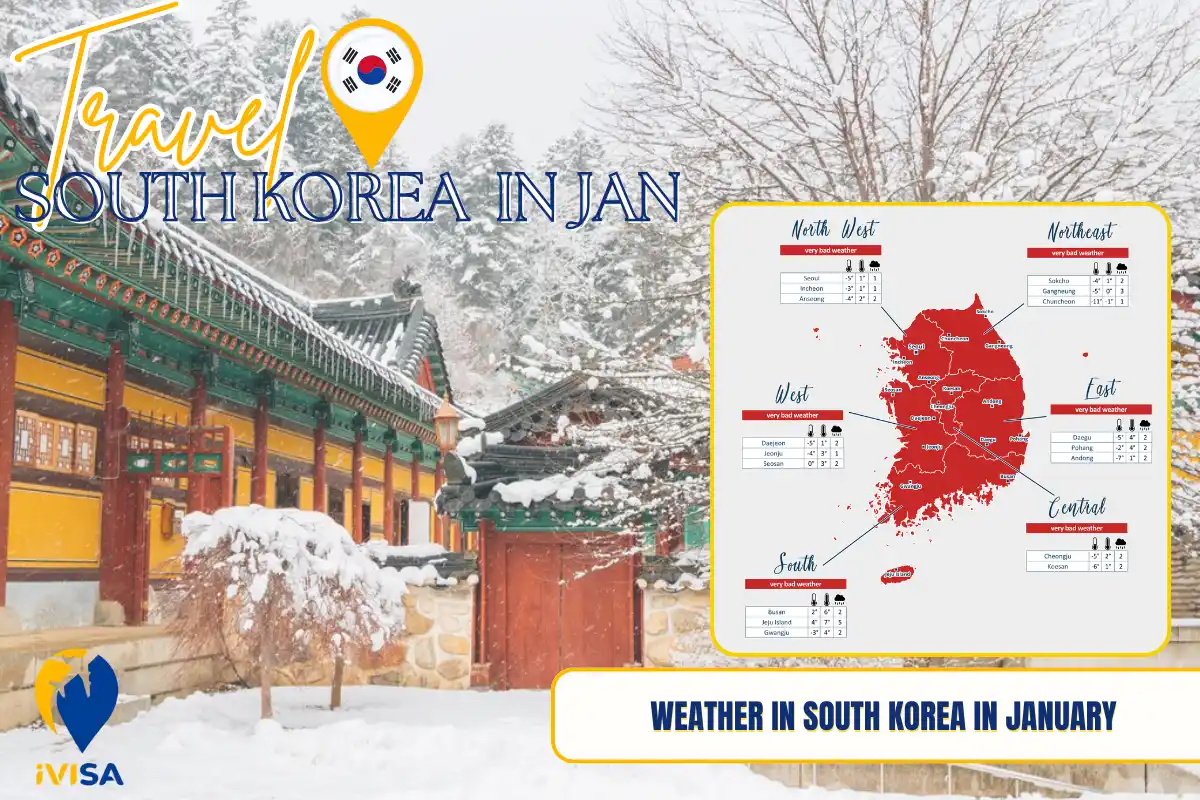
According to the Korea Meteorological Administration, average temperatures in January are about 1-2°C lower than in December and 2-3°C lower than in February. However, January is also the time when snow falls most steadily and heavily throughout the year. This makes activities such as snow viewing, skiing, and winter festivals run smoothly and offer a more authentic winter experience than in other months.
Weather in South Korea in January
|
City |
Average Temperature | Snow Probability | Compared to Dec & Feb |
|
Seoul |
-4°C to 3°C | ~60% | Colder than February, snow more stable |
| Jeju | 1°C to 7°C | ~20% |
Warmer than Seoul, less snow |
| Busan | 2°C to 9°C | ~10% |
Moderately cold, little snow |
If you have visited South Korea in November, you will notice a very clear difference when returning in January. November still has red leaves and mild weather, while January brings true winter with snow-covered landscapes, cold winds, and prolonged low temperatures.
Compared to South Korea in December, January is slightly colder but comes with denser, more stable snow. It is also the period when many large-scale winter festivals are held, making activities such as snow play and skiing more fulfilling than at the beginning of winter.
Who Should Travel to South Korea in January?
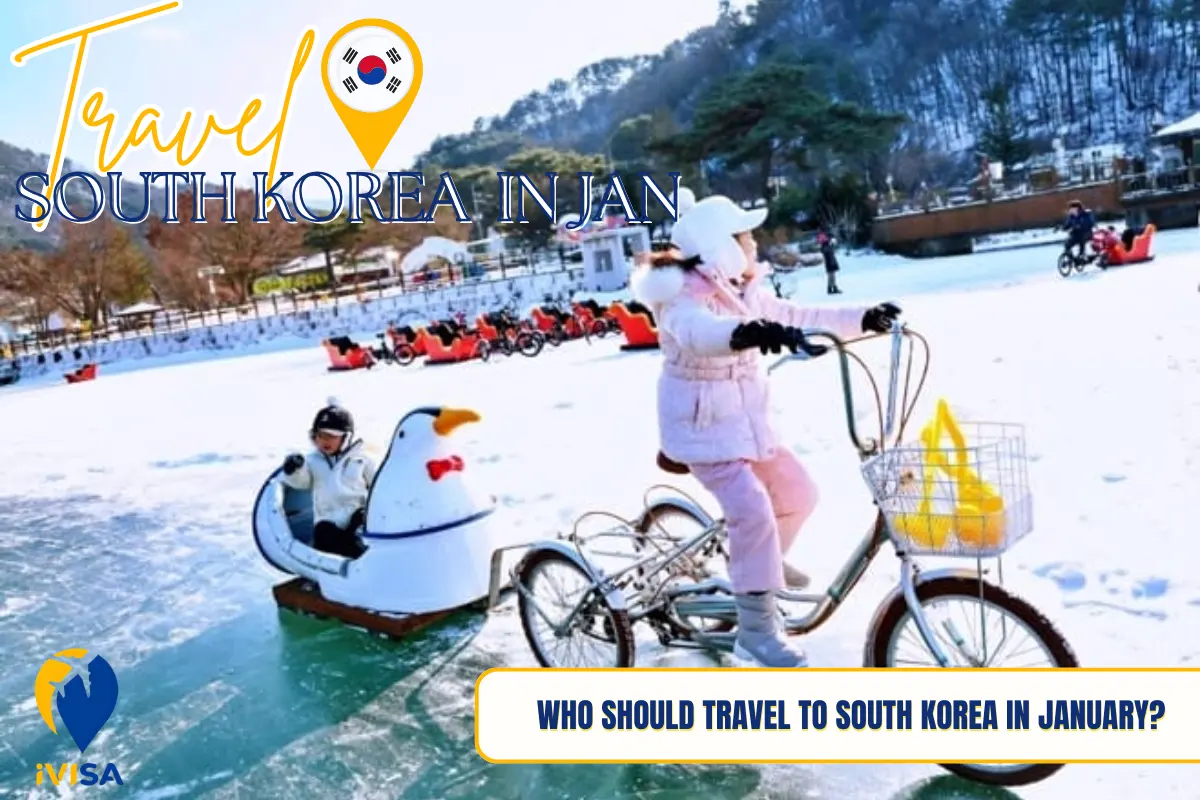
You should consider traveling to South Korea in January if you want to experience winter in its true form, with natural snowfall covering the scenery. This season is also suitable if you are interested in traditional winter festivals in Korea, such as ice festivals, skiing, and outdoor activities enjoyed by locals. Additionally, January is ideal if you are willing to endure cold weather in exchange for a unique and authentic winter experience in Korea.
Who Should Avoid Traveling to South Korea in January?
You should consider avoiding travel to South Korea in January if you prefer a relaxing pace, moving slowly, and spending much time outdoors taking photos. For instance, if you are used to leisurely walking around streets, sitting at outdoor cafés, or taking extended photos at check-in spots, temperatures often below 0°C can make these activities exhausting and uncomfortable.
January is also unsuitable for people sensitive to cold or those with health issues related to respiratory, heart, or joint problems. For example, elderly people or those prone to colds or joint pain may find continuous outdoor movement in freezing temperatures difficult.
Furthermore, if you travel with young children or elderly family members who are not accustomed to sub-zero winter conditions, you should consider visiting South Korea during warmer seasons like spring or autumn to ensure a more comfortable and safe trip.
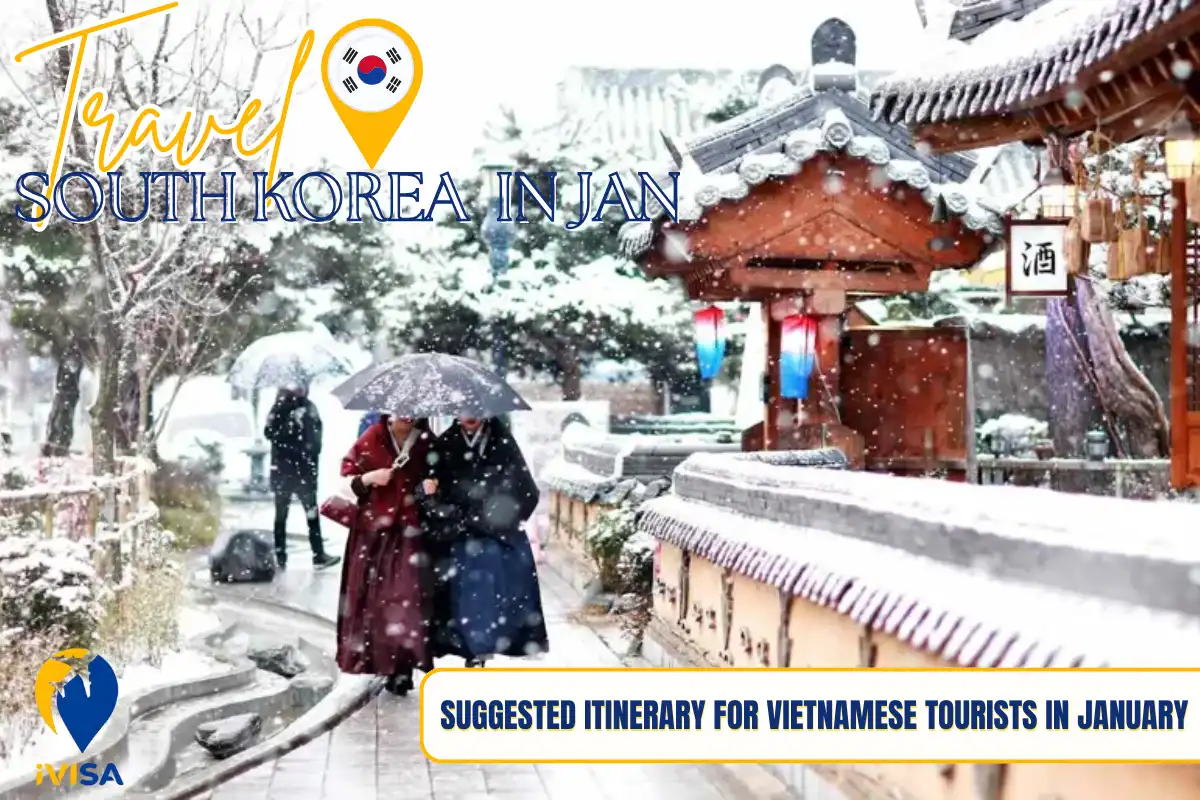
Suggested Itinerary for Vietnamese Tourists in January
Once you decide to travel to South Korea in January, the next important question is not how many places to visit, but how long to stay and how to arrange your schedule so you don’t get exhausted by the cold. In reality, winter trips in Korea require compact itineraries, logical movement between locations, and resting points. A well-planned schedule makes a January trip much more enjoyable and rich in experiences.
Self-Guided 4-7 Day Itinerary
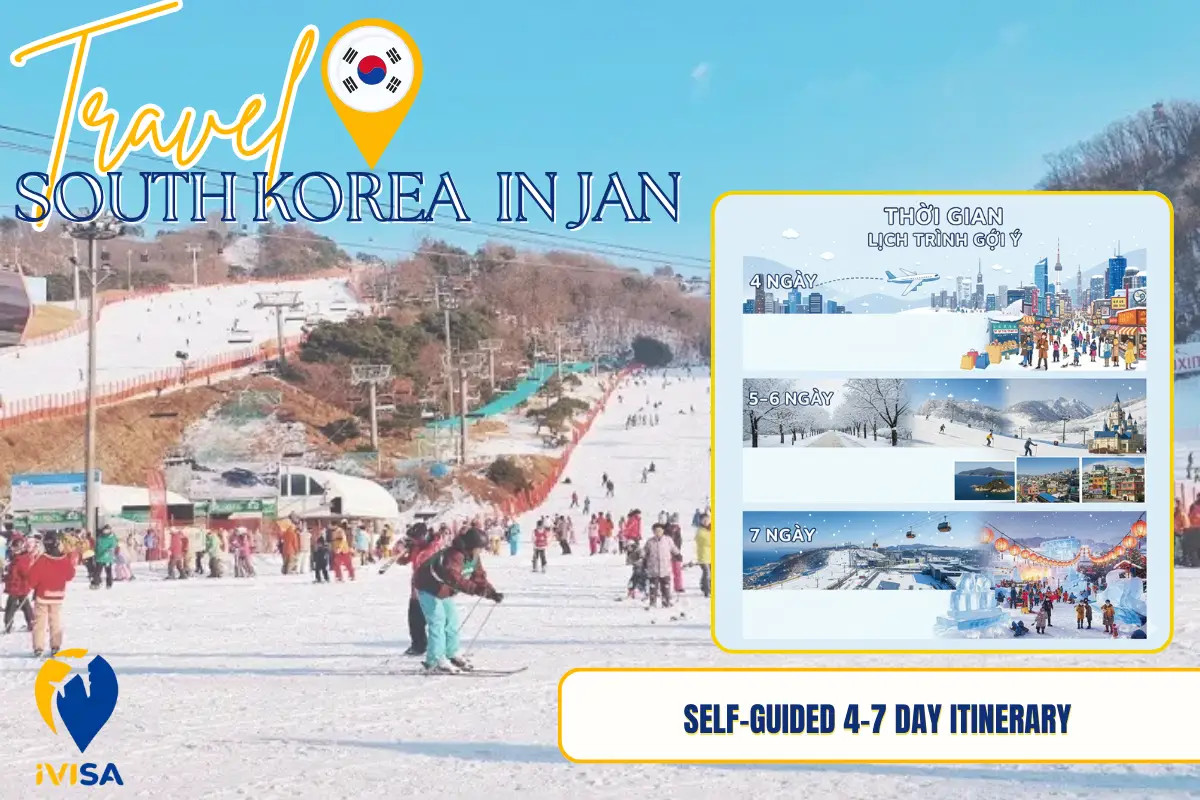
From consulting and handling thousands of Vietnamese tourist applications each year, iVISA finds that 5-6 days is the most suitable duration for a January trip. Shorter trips may leave you exhausted due to the cold and tight schedules, while longer trips significantly increase accommodation and transportation costs during winter.
|
Duration |
Suggested Itinerary | Suitable For |
|
4 days |
Day 1: HCM – Seoul, rest, explore Myeongdong
Day 2: Skiing at Gangwon or outskirts of Seoul Day 3: Lotte World – N Seoul Tower Day 4: Shopping, return to Vietnam |
Gen Z first-timers wanting a quick winter experience |
| 5-6 days | Seoul – Nami Island – ski resort. Optionally add Busan or Jeju for a change of scenery |
Small friend groups (2-4), self-guided |
| 7 days | Expand to include large-scale snow festivals, big ski resorts |
Travelers with previous Korea experience |
Must-Attend Winter Festivals
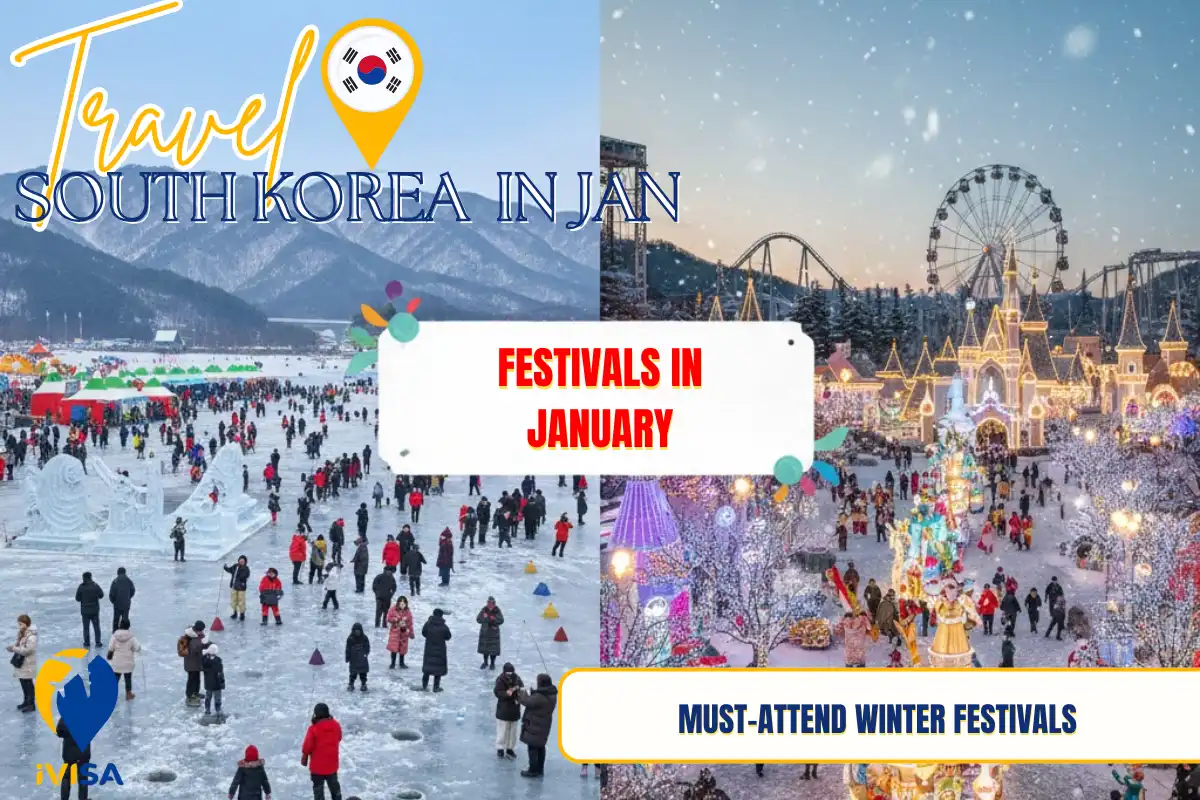
One of the reasons January still attracts many international tourists despite the cold is the well-organized winter festival system. According to the Korean Ministry of Culture, Sports, and Tourism, over 40% of international visitors in January participate in at least one seasonal festival.
Some key festivals to consider including in your itinerary:
|
Festival |
Time | Location | Highlights |
|
Hwacheon Sancheoneo Ice Festival |
Late January | Hwacheon, Gangwon | Ice fishing, over 1 million visitors annually |
|
Everland Winter Festival |
Dec – Early Feb | Gyeonggi |
Snow activities, lights, winter rides |
| Gangwon Snow Festival | January | Gangwon |
Skiing, ice sculptures, outdoor events |
| Extended Christmas Atmosphere | Early January | Seoul, Myeongdong |
Decorations, shopping, night check-ins |
Preparation Tips for Traveling to South Korea in January
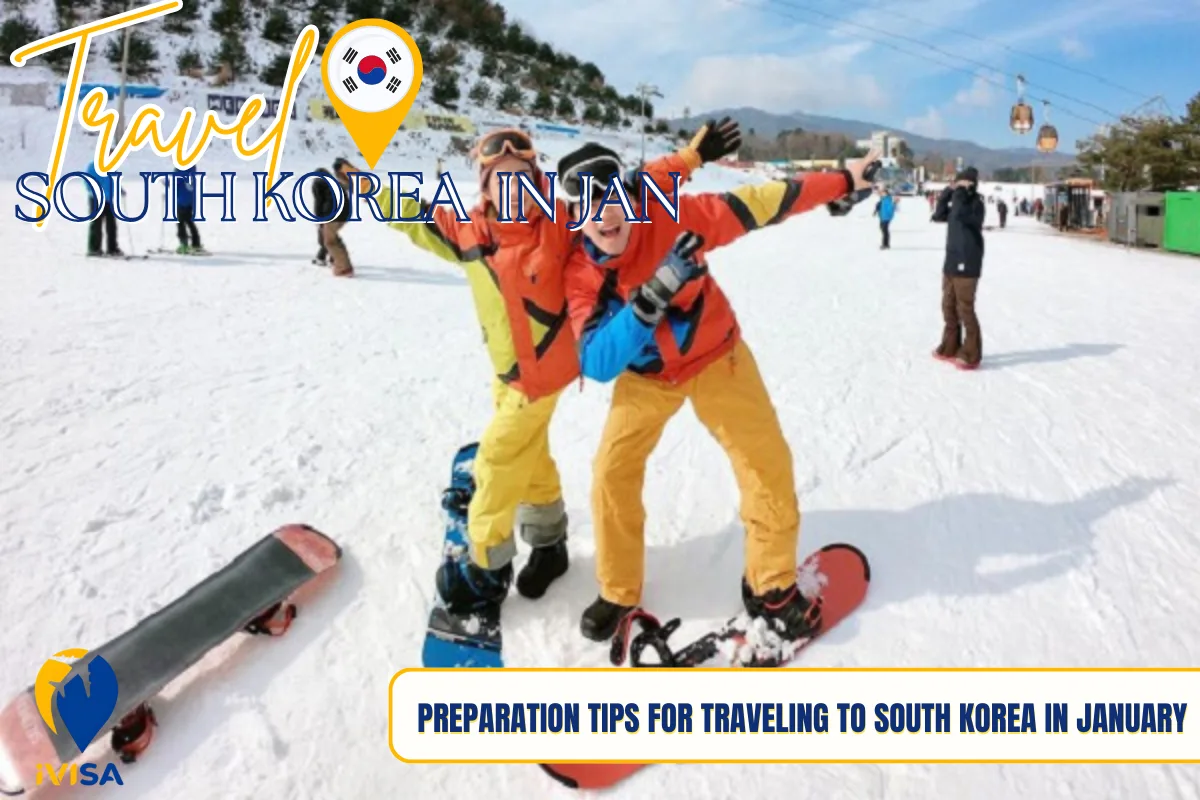
Traveling to South Korea in January isn’t difficult, but poor preparation can make it exhausting. Temperatures often fall below 0°C, flight schedules are tight, and visa requirements are strict. From handling thousands of Korean travel applications each year, iVISA sees that most winter trip risks come from inadequate initial preparation.
What to Wear to Avoid Cold Shock
Many ask: “Is wearing as many layers as possible enough?” The truth is that layering incorrectly can make you tired, drained, and prone to colds.
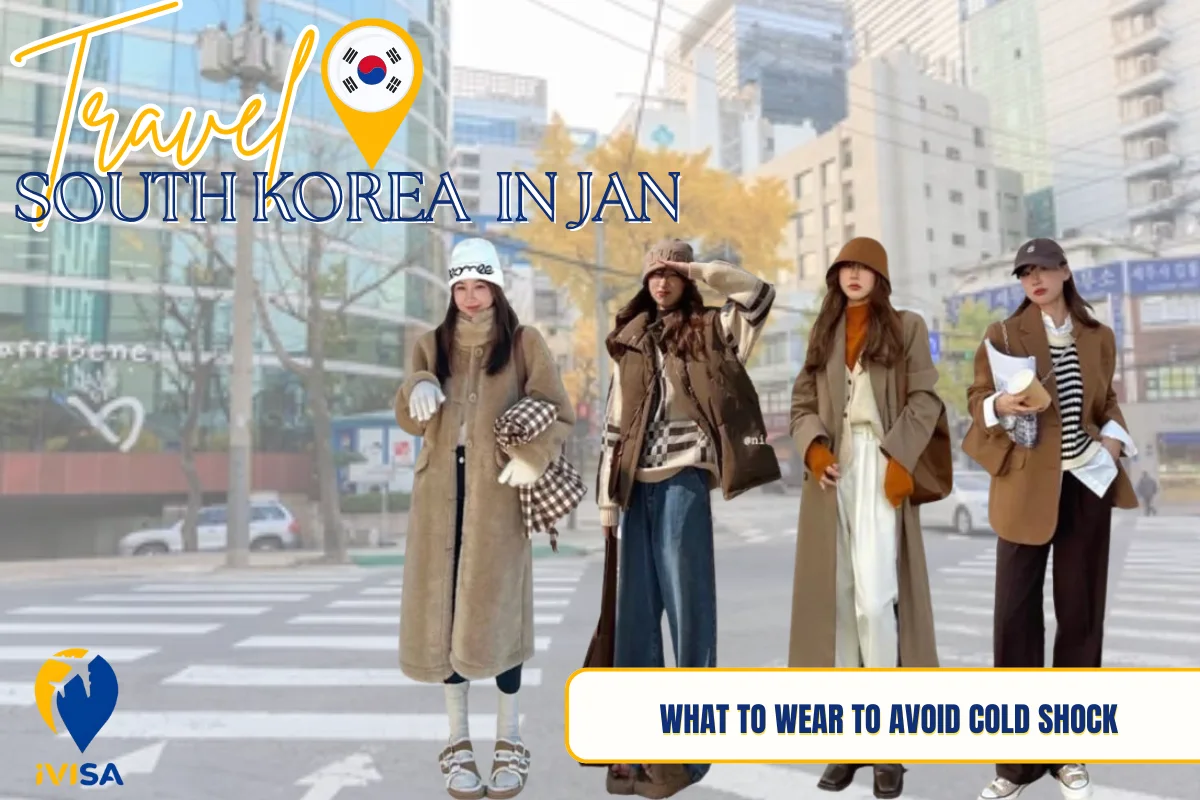
The principle for dressing correctly in January: keep your torso warm first, then hands and feet. An effective winter outfit should include:
- Thermal base layer (mandatory, inner layer)
- Sweater or fleece (middle layer)
- Thick down jacket, windproof
- Gloves, beanie, scarf
- Shoes with anti-slip soles
Tip: Keeping your torso warmer than your hands and feet helps prevent cold shock when moving between heated indoor spaces and the freezing outdoors.
Which Type of Korean Tourist Visa to Choose
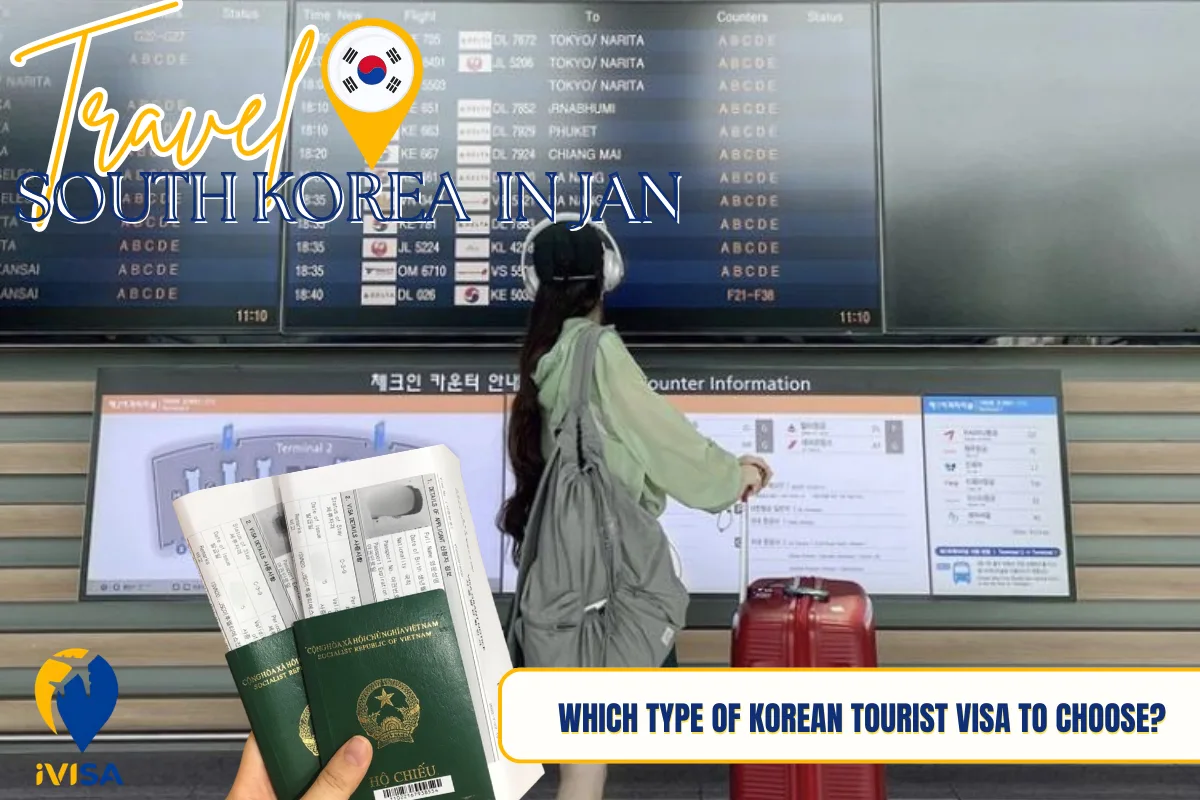
Currently, Single Visa (single-entry visa) is the most commonly chosen short-term tourist visa by Vietnamese travelers when traveling to South Korea independently, especially for trips in January. According to application data processed by iVISA, most first-time travelers to South Korea opt for this type of visa due to its clear validity period and relatively simple documentation requirements.
According to application data processed by iVISA, most first-time travelers to South Korea opt for this type of visa due to its clear validity period and relatively simple documentation requirements.
The most common types of South Korean tourist visas currently include:
- Single Visa: A single-entry visa valid for 3 months from the date of issuance
- Multiple Visa: A multiple-entry visa valid for up to 5 years or 10 years
For first-time travelers visiting South Korea in January, the Single Visa is considered a suitable option. This visa type matches short-term itineraries and offers a high approval rate when the application is prepared correctly and meets the required criteria. If you want to increase your chances of visa approval from the first submission, contact iVISA for full A–Z support with your South Korea tourist visa application.
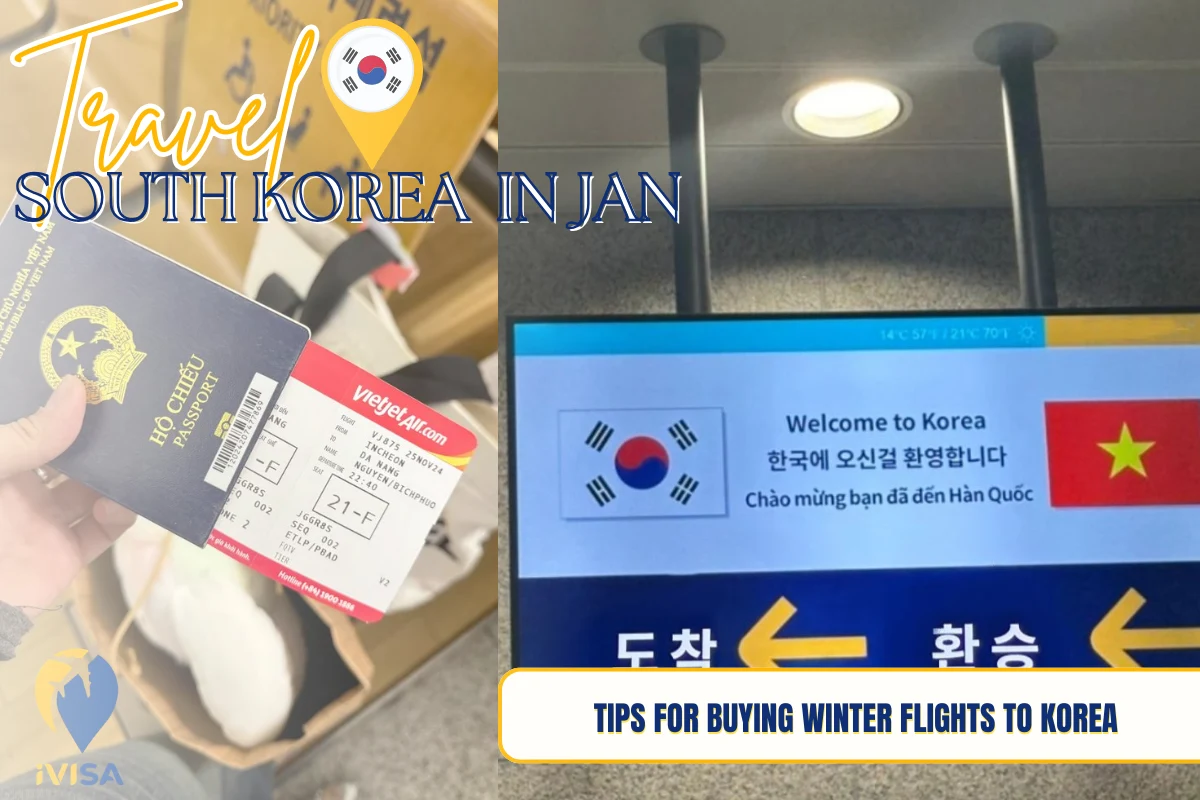
Tips for Buying Winter Flights to Korea
Should you travel to Korea in January to save on airfare? Yes, if you book at the right time. Winter flight prices are usually 10-20% cheaper than the cherry blossom season but rise rapidly in late January due to holiday travel and Lunar New Year.
Practical advice:
- Book 6-8 weeks in advance
- Prefer direct flights HCM – Seoul
Real Experiences from Vietnamese Tourists
What makes a winter trip comfortable is not the itinerary or check-in spots, but rather what you eat and what you buy to suit your actual needs. Below are real insights compiled from the experiences of iVISA customers.
What Should You Eat in Korea in January to Stay Warm?
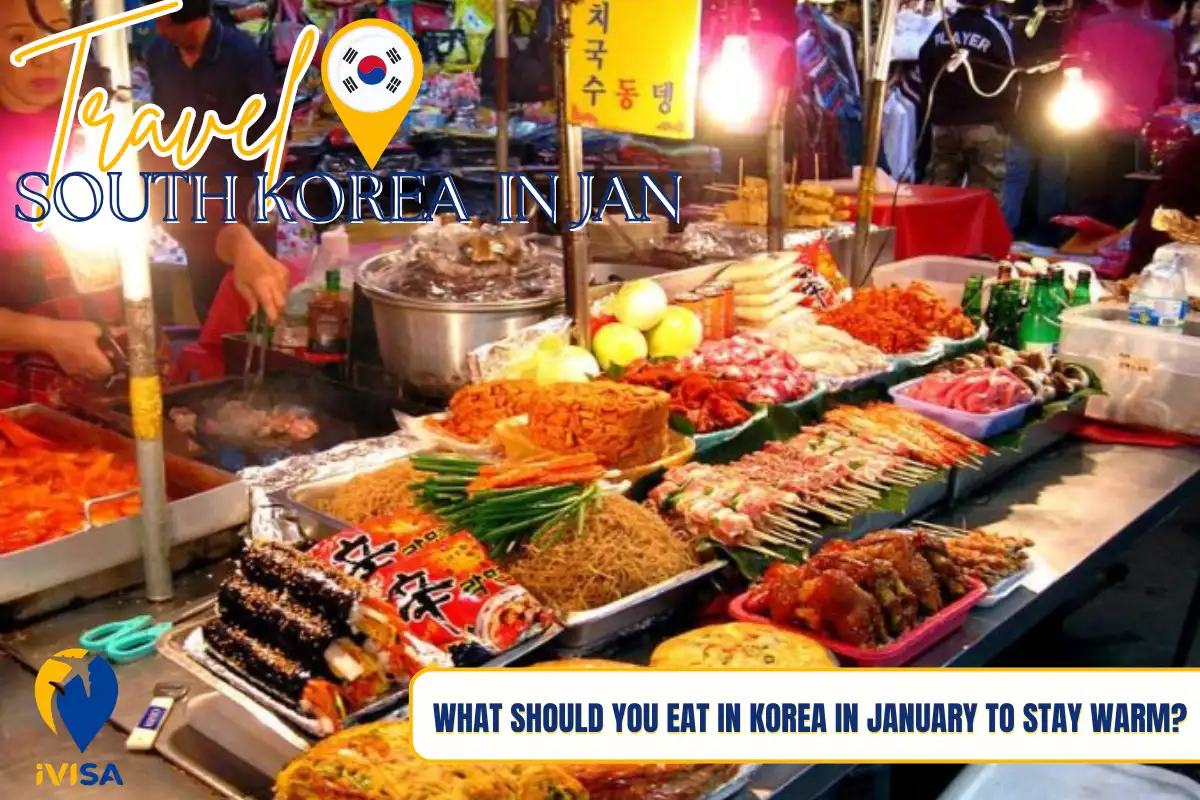
In January, Korean cuisine mainly focuses on hot dishes, mildly spicy flavors, and broth-based meals, which help the body retain heat when moving outdoors in cold weather.
Dishes you should try:
- Kimchi jjigae: spicy and warming, easy to eat, and available at most local restaurants
- Spicy tofu soup (Sundubu jjigae): comforting and especially suitable for dinner
- Mandu, tteokbokki: easy to find in shopping areas and night markets
- Hotteok: a hot sweet pancake that is perfect for eating while walking outdoors
According to feedback from iVISA customers, the average food expense in Korea in January ranges from 200,000 to 500,000 VND per person per day, depending on whether you eat at local eateries or restaurants.
What Should You Buy as Souvenirs When Traveling to Korea in January?
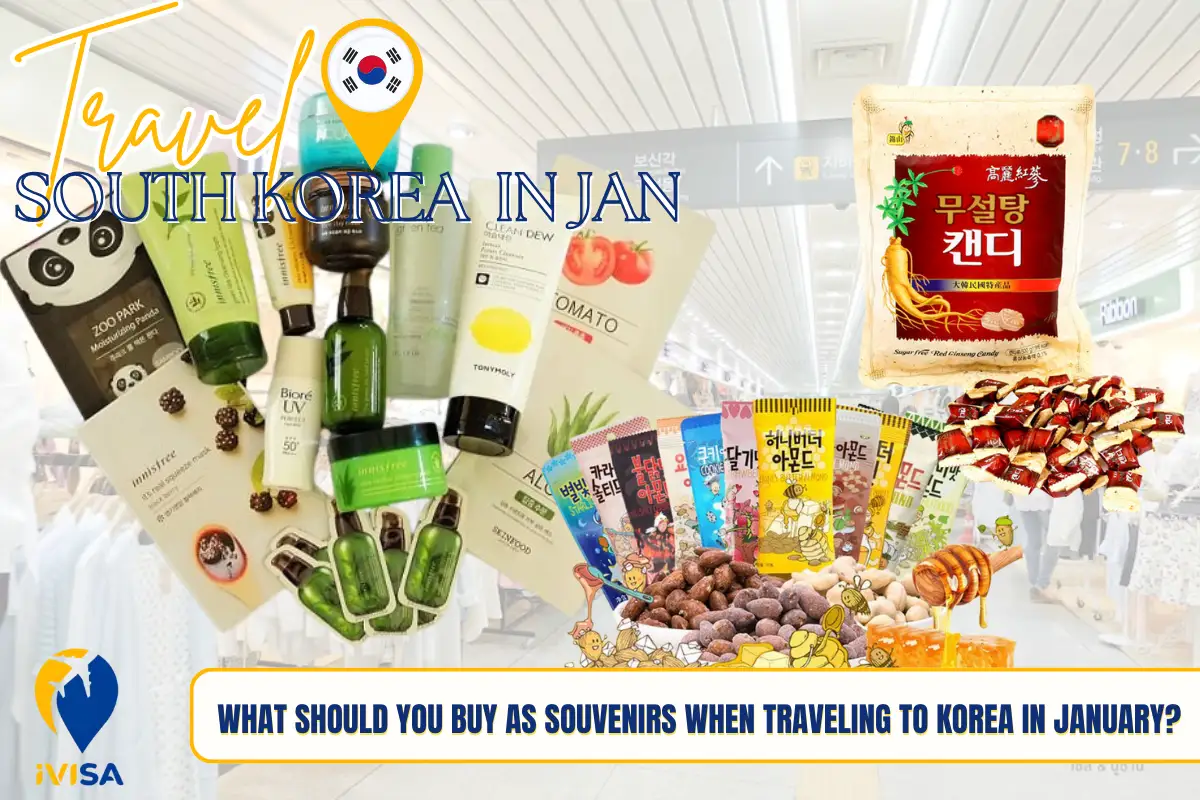
If you are wondering what to buy as gifts when traveling to Korea, January is a convenient time since many winter-related products are widely available.
The most popular souvenirs chosen by Vietnamese travelers include:
- Korean domestic cosmetics: easy to purchase at Olive Young or duty-free stores
- Ginseng and dried persimmons: suitable gifts for elderly family members and relatives
- Korean snacks and sweets: compact and easy to bring back to Vietnam
Frequently Asked Questions About Traveling to South Korea in January
Is January in Korea too cold for traveling?
January is the coldest period of the year in Korea, with average temperatures in Seoul ranging from -6°C to 3°C. However, cold weather does not necessarily mean traveling is difficult. If you prepare proper thermal clothing, avoid staying outdoors for too long, and plan a balanced itinerary that alternates between indoor and outdoor attractions, a trip to Korea in January can still be smooth and manageable.
Should you travel to Korea independently or join a tour in January?
The choice depends on your travel experience and who you are traveling with. Independent South Korea travel is more suitable for young travelers who are comfortable moving around and handling situations in cold weather. Meanwhile, package tours are a better option for families, elderly travelers, or first-time visitors to Korea in winter, as transportation, meals, and schedules are arranged in advance, helping reduce fatigue and potential risks.
Are there many festivals to join in Korea in January?
Yes. According to statistics from the Korean Ministry of Culture and Tourism, more than 40% of international visitors to Korea in January participate in at least one winter festival. The most notable are ice and snow festivals in Gangwon and Hwacheon, usually held from mid to late January, offering an authentic winter experience that other months cannot provide.
Which is more suitable in January: Seoul or Jeju?
Seoul is more suitable if your main goals are playing in the snow, joining winter festivals, and experiencing urban life in cold weather. In contrast, Jeju has a milder climate, with temperatures 3-5°C higher than the mainland, making it a better choice if you prefer a relaxing trip, light sightseeing, and less exposure to extreme cold.
Are you ready to set foot in Seoul or Jeju during the white-snow season of January? Is your Korean tourist visa application prepared correctly and completely? Contact iVISA today for consultation and fast visa support, so you can depart with confidence and follow your plan without worries.
iVISA Property & Citizenship
- Add: Số 99 Nguyễn Thị Nhung, phường Hiệp Bình, TPHCM
- Hotline: 0937 999 610
- Email: info.ivisatravel@gmail.com
