


 Dubai Tourist Visa
 China Tourist Visa
 South Korea Tourist Visa
 Japan Tourist Visa
 Taiwan Tourist Visa
 Hong Kong Tourist Visa
 Golden Visa UAE
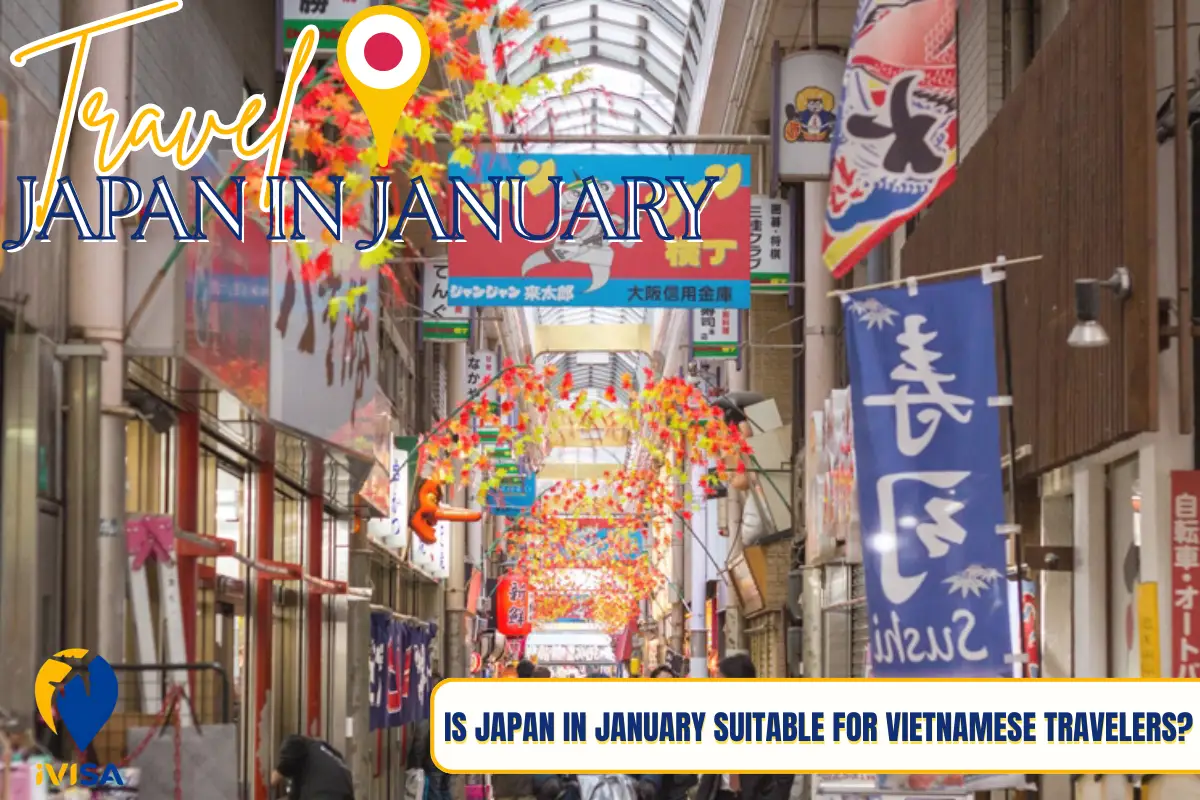
Did you know that January is the peak of winter in Japan, when temperatures in many areas drop below 0°C and heavy snow covers the northern regions? So what makes traveling to Japan in January appealing, is it suitable for Vietnamese travelers, and what experiences should you not miss to make your trip truly memorable?
Is Japan in January suitable for Vietnamese travelers?
January is the height of winter in Japan, with temperatures ranging from 0-10°C in the north, 2-8°C in central regions, and 10-15°C in the south. Compared to Vietnam’s warm tropical climate, Vietnamese travelers will clearly feel the cold.
How is the January weather different from Vietnam?
Compared to Vietnam, January in Japan brings a deeper and drier cold, especially for those accustomed to tropical weather. In major cities such as Tokyo, Osaka, and Kyoto, you can still feel the vibrant pace of life despite shorter days and noticeably lower temperatures. Unlike the typically warm Tet atmosphere in Vietnam, traveling to Japan in January requires proper preparation, including thermal clothing, anti-slip shoes, and winter accessories.
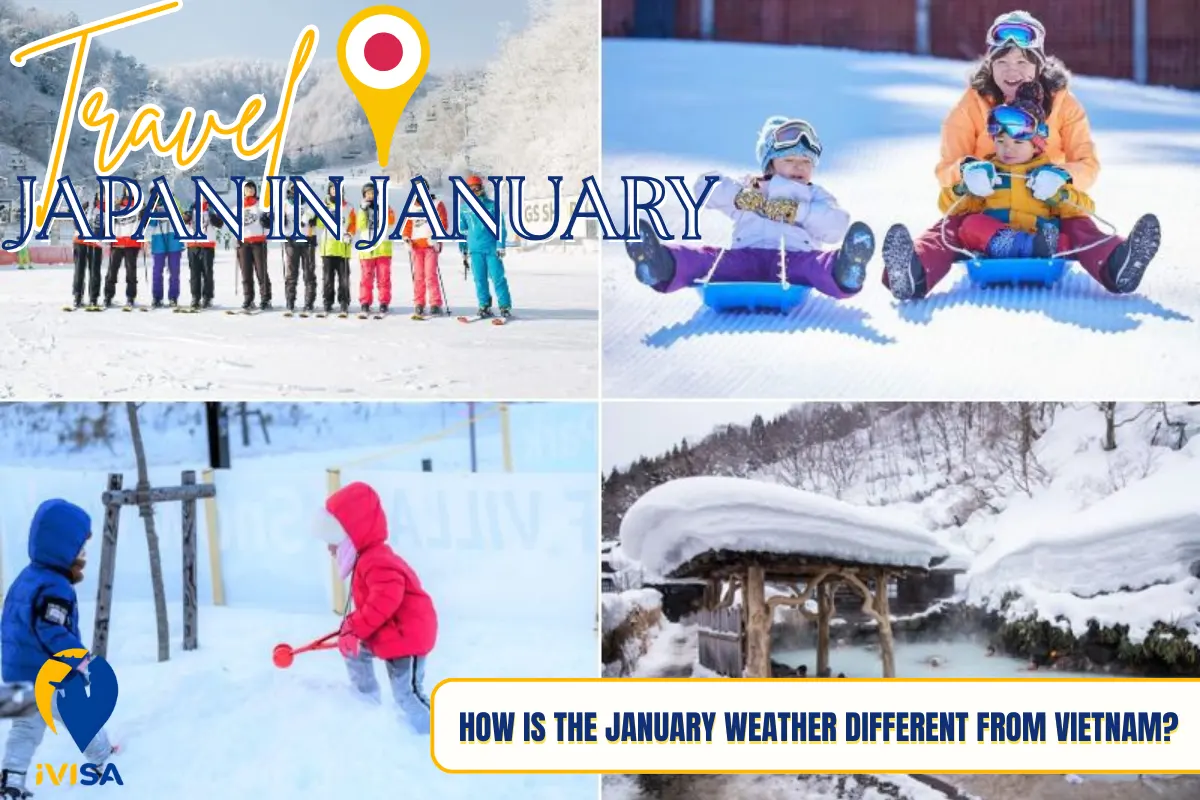
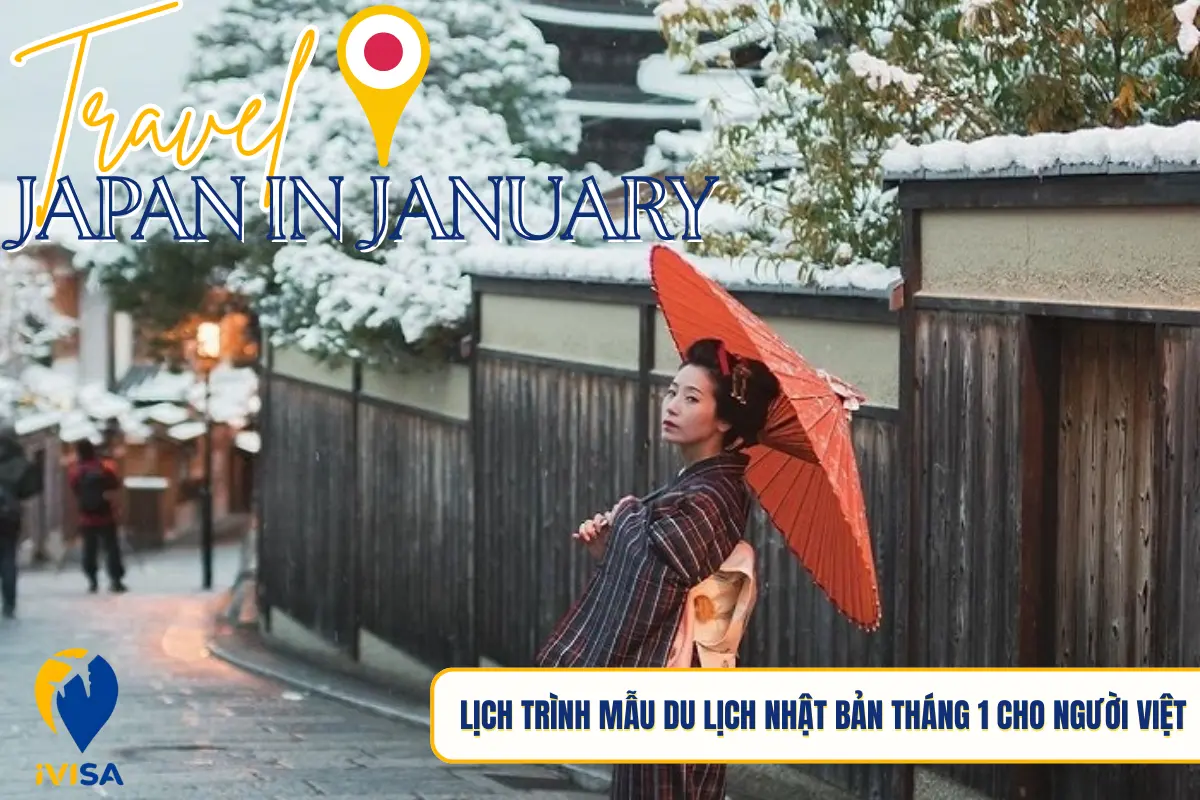
In return, you can immerse yourself in early-year festivities such as Oshogatsu and Hatsumode, which offer a solemn yet refreshing cultural experience distinct from Vietnamese traditions.
Who should travel to Japan in January?
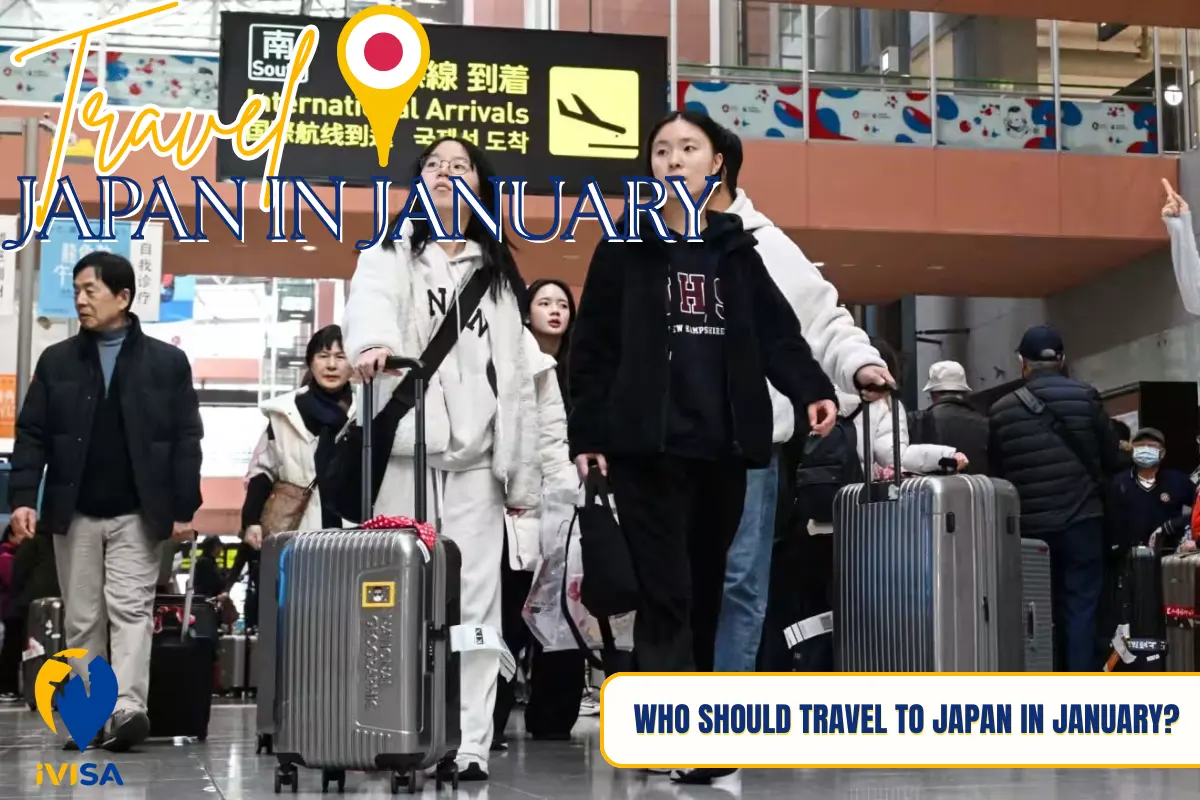
Traveling to Japan in January is especially suitable if you love snow and cinematic winter landscapes. You can encounter scenes straight out of Japanese films in places like Hokkaido, the historic village of Shirakawa-go, or snow-covered areas around Mount Fuji. This is also an ideal time for skiing in Niseko or soaking in outdoor onsen amid the cold, as seen in romantic winter movies.
For independent travelers, January makes it easier to arrange itineraries, book flights and hotels, and enjoy activities according to personal preferences without the crowds of peak seasons.
Who should be cautious when traveling to Japan in January?
You should carefully consider traveling to Japan in January if you are going with young children, elderly family members, or people with underlying health conditions. Cold and dry winter weather can be challenging for those with weaker immunity. People with cardiovascular issues or high blood pressure may be affected due to blood vessel constriction caused by low temperatures. Those with asthma, bronchitis, or sinusitis may also experience symptom flare-ups in cold air.
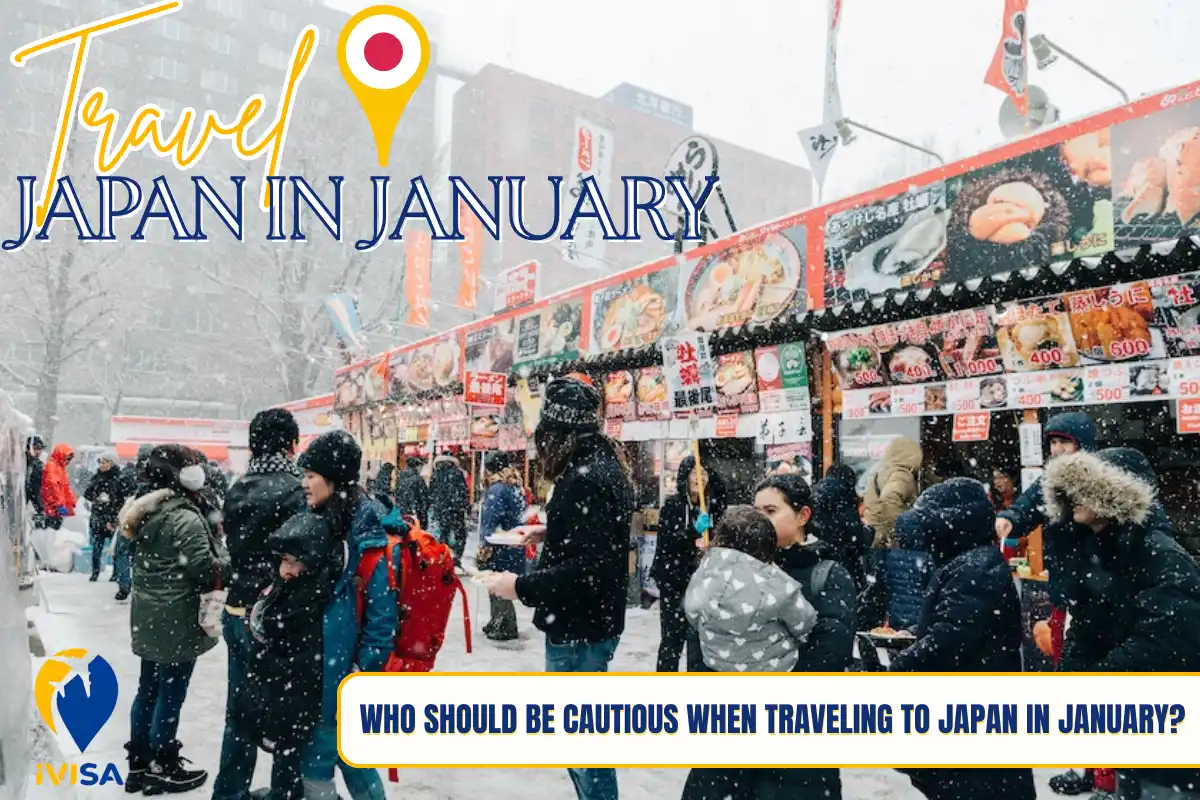
Children and elderly travelers are more prone to catching colds and feeling fatigued due to reduced ability to retain body heat. If this is your first trip to Japan, the sharp contrast between indoor heating and outdoor cold may also cause discomfort. In such cases, you may want to consider destinations like Okinawa or Kyushu, or travel during March-April for a gentler and safer experience.
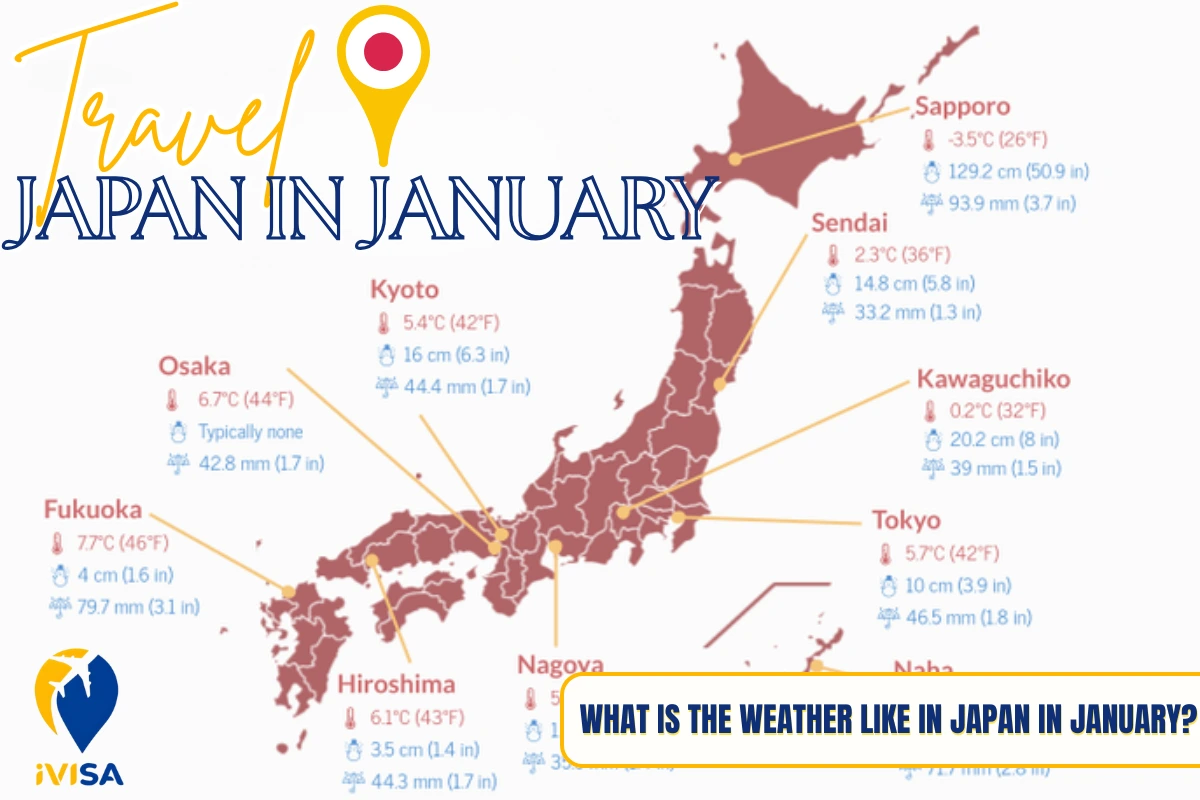
What is the weather like in Japan in January?
January is the coldest winter period in Japan, with clear temperature differences between regions. If you are traveling independently, carefully consider your health and travel goals to choose suitable destinations.
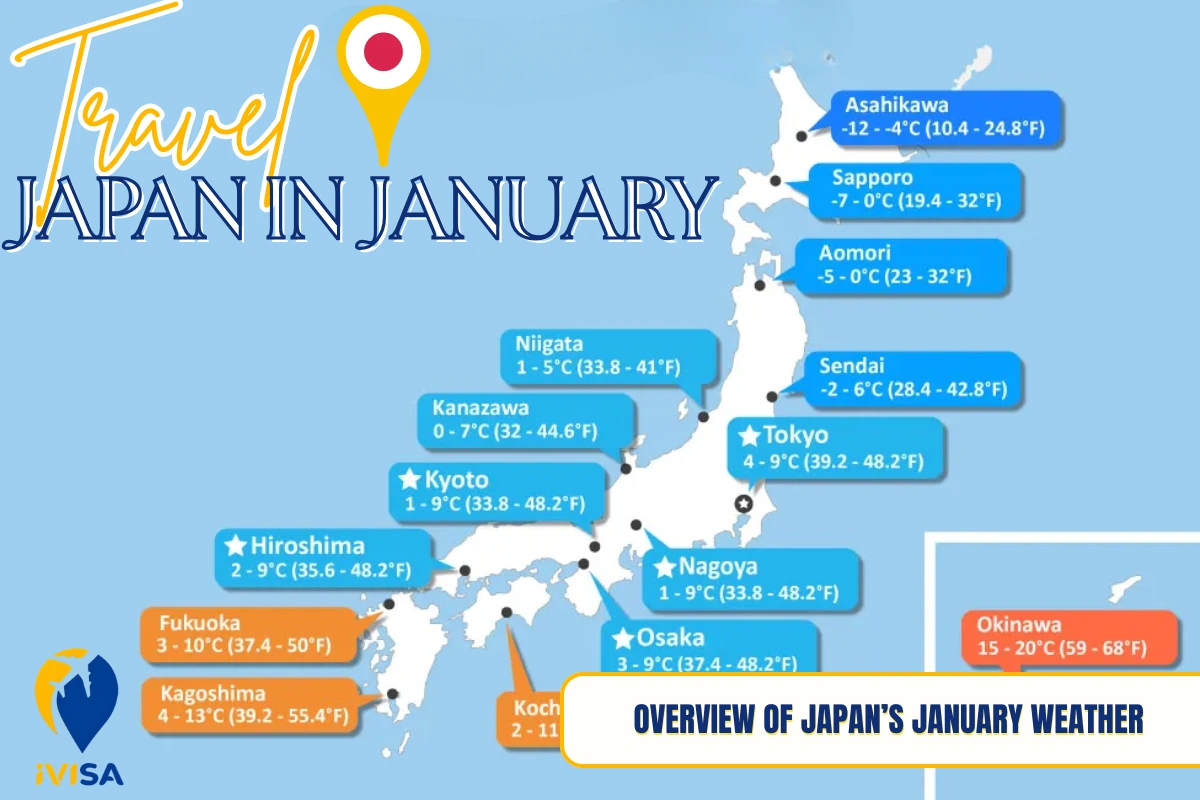
Overview of Japan’s January weather
January is the coldest month of the year in Japan, with average temperatures ranging from 0-15°C depending on the region. Daylight hours are shorter, typically from around 7 a.m. to 5 p.m., making the cold feel more pronounced, especially for travelers from tropical climates like Vietnam.
In northern regions such as Hokkaido, temperatures frequently fall below 0°C, with heavy snowfall lasting for consecutive days. This area is ideal for winter activities such as skiing, snow sightseeing, and nature photography. Moving south to central regions, major cities like Tokyo, Kyoto, and Osaka experience milder temperatures of around 1-10°C.
Meanwhile, southern Japan, including Kyushu and especially Okinawa, offers a completely different atmosphere. Temperatures range from 10-20°C, with little to no snow, making it suitable for travelers who are not accustomed to cold weather or who are traveling with family.
How does the weather affect travel experiences?
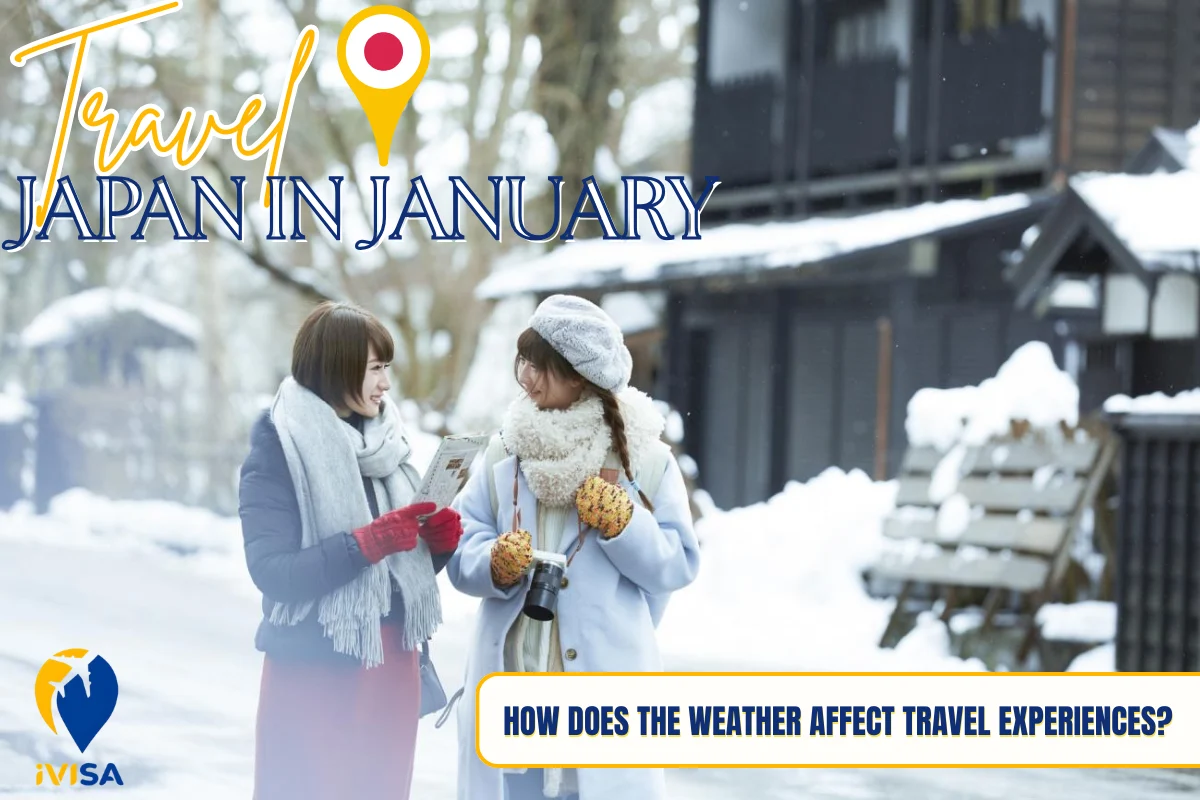
In January, Japan offers many exciting experiences for travelers. Snow-covered landscapes create ideal conditions for photography and winter sports. The early-year festive atmosphere also adds emotional depth and uniqueness to the journey.
However, cold weather comes with certain inconveniences. Slippery roads can make walking difficult, trains may experience delays due to heavy snow, and luggage becomes bulkier because of winter clothing. This requires more careful planning compared to other seasons.
For young travelers who enjoy adventure and do not mind the cold, regions like Hokkaido or Nagano are highly rewarding. On the other hand, families with children or elderly members should prioritize Tokyo or Kyushu for safety and convenience.
What makes January festivals in Japan special?
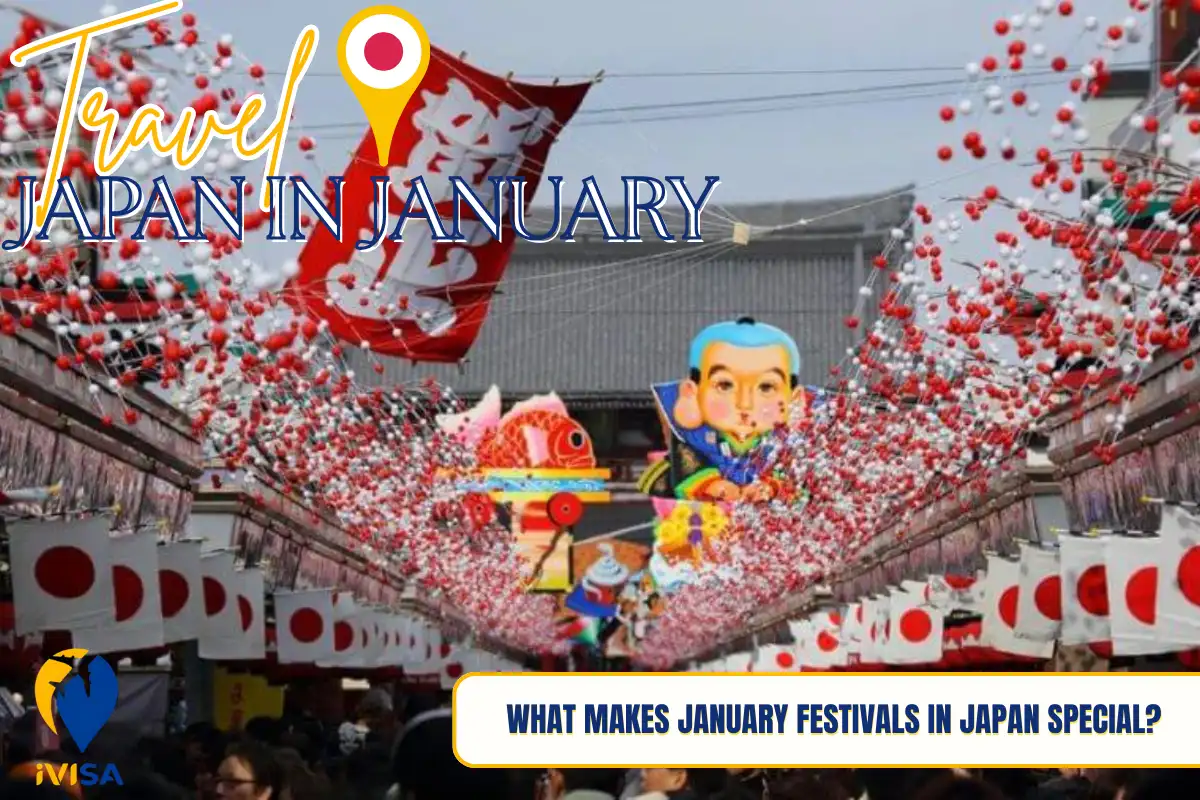
January is one of the most exciting times to experience travel to Japan. Beyond snowy winter landscapes and majestic scenery, this month features many colorful traditional festivals, unique outdoor activities, and iconic winter cuisine.
Festivals and events unique to January
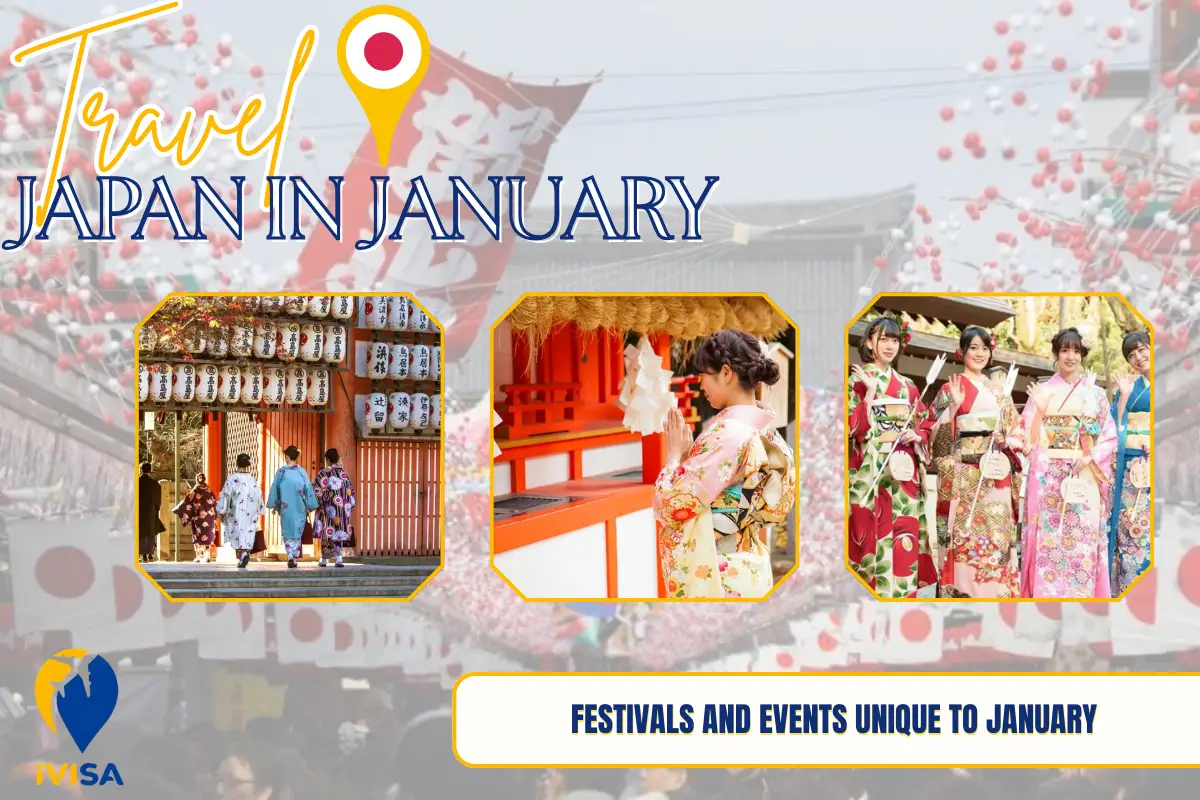
The first month of the year in Japan marks several traditional festivals closely tied to local culture and beliefs. Japanese New Year (Oshogatsu) takes place from January 1 to 3 nationwide, when people visit temples to pray for peace and prosperity. Following this is Hatsumode, from January 1 to 7, during which locals and visitors visit major shrines in Tokyo, Kyoto, and Osaka to draw fortune slips and purchase lucky charms.
Seijin no Hi (Coming of Age Day), held on the second Monday of January, celebrates those who turn 20. Many regions organize ceremonies and events showcasing beautiful traditional attire and customs.
Enjoying snowy winter landscapes: Must-try experiences
Beyond festivals, January’s scenery and outdoor activities are incredibly appealing. Areas such as Hokkaido, Nagano, and Niigata are known for high-quality snow and peak ski seasons, attracting visitors from across Asia and beyond. Snow season often lasts for weeks, with resorts like Niseko drawing large international crowds every winter.
In addition to skiing, you can relax in hot springs in Hakone, Beppu, or Kusatsu. Destinations such as Shirakawa-go village or Jigokudani Monkey Park offer romantic and unique winter moments. In the evenings, cities like Tokyo and Nagoya host winter light-up events, transforming urban landscapes into magical scenes.

Japanese winter cuisine
Winter cuisine is an essential part of traveling to Japan in January. Cold weather makes hot dishes more comforting and flavorful. You should try nabe (Japanese hot pot) such as shabu-shabu or sukiyaki, with rich broth that quickly warms the body. Hot ramen and oden—slow-simmered vegetables, eggs, and fish cakes—are also popular during this season.
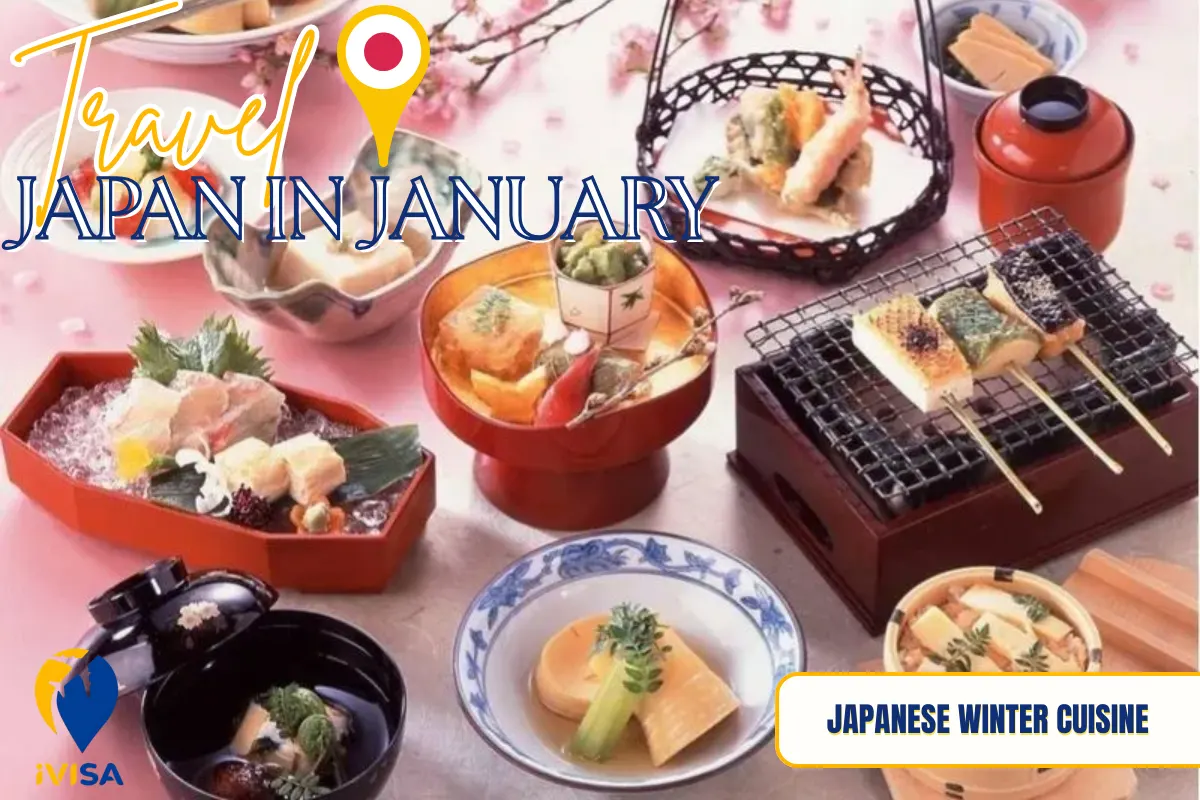
After a day of exploring in the cold, enjoying hot tea, warm milk, or heated sake helps you relax and recharge. Familiar dishes take on a completely different charm when enjoyed in Japan’s winter atmosphere.
Thanks to the combination of cuisine, snowy scenery, and festive vibes, traveling to Japan in January offers a complete winter experience. To make your independent trip smoother, contact iVISA for full support with your Japan travel visa from A to Z
Where should you go in Japan in January? Suggested destinations for Vietnamese travelers
Choosing the right destination when traveling to Japan in January depends greatly on your desired experience. Selecting the right places helps you fully enjoy winter while avoiding fatigue caused by cold weather and extensive travel.
The classic route: Tokyo – Fuji/Hakone – Kyoto – Osaka
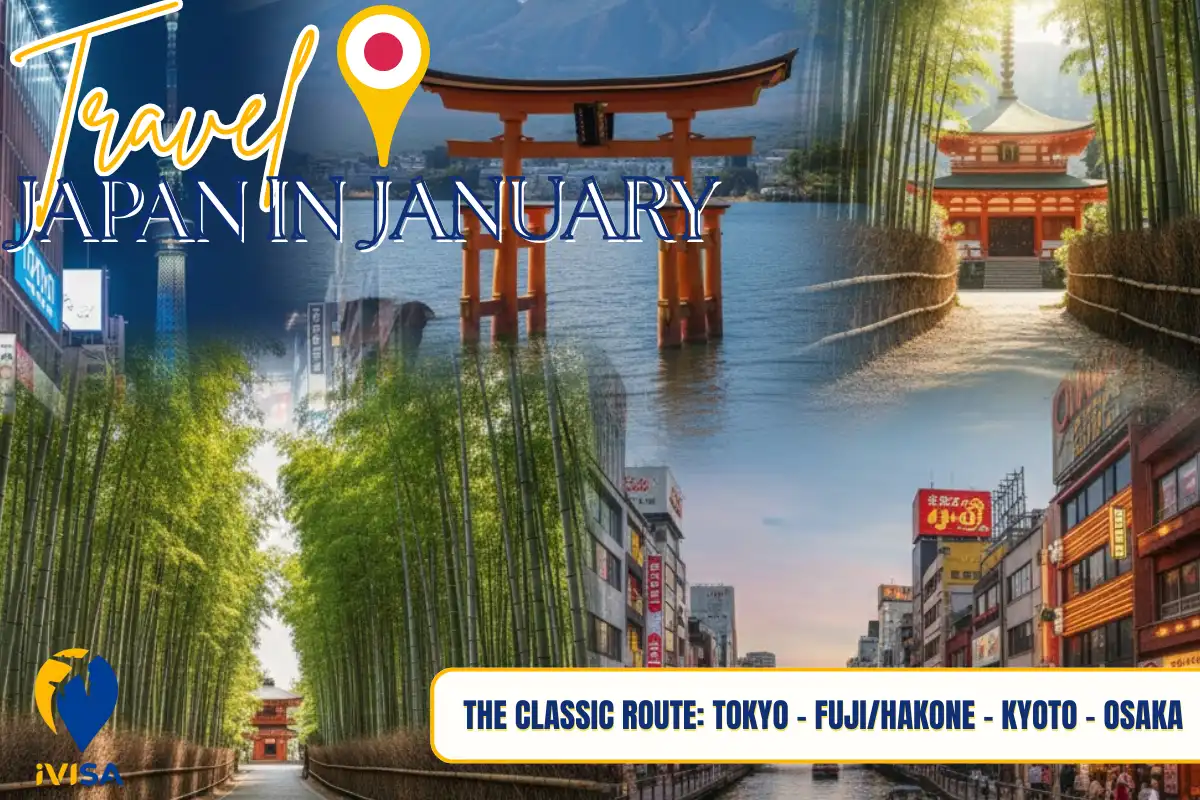
For first-time visitors, the Tokyo – Fuji/Hakone – Kyoto – Osaka route is safe and easy to navigate. In January, Tokyo and Osaka have temperatures around 5-10°C, with dry cold and little heavy snow, making travel convenient. Tokyo offers many indoor attractions and shopping areas, while Kyoto and Osaka are ideal for cultural and culinary exploration in a peaceful early-year atmosphere.
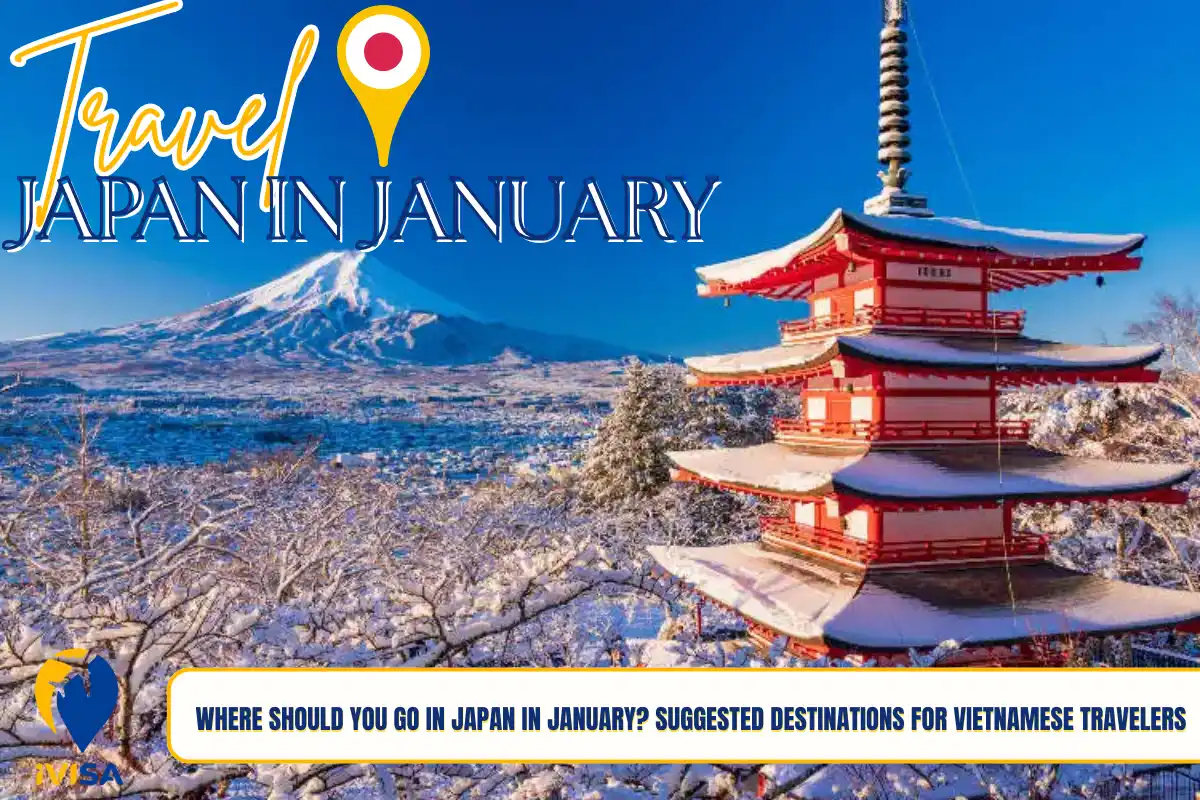
From Tokyo, it takes about 90 minutes to reach Hakone or the Mount Fuji area, where you can admire snowy scenery and enjoy outdoor onsen with mineral water temperatures of 38-42°C.
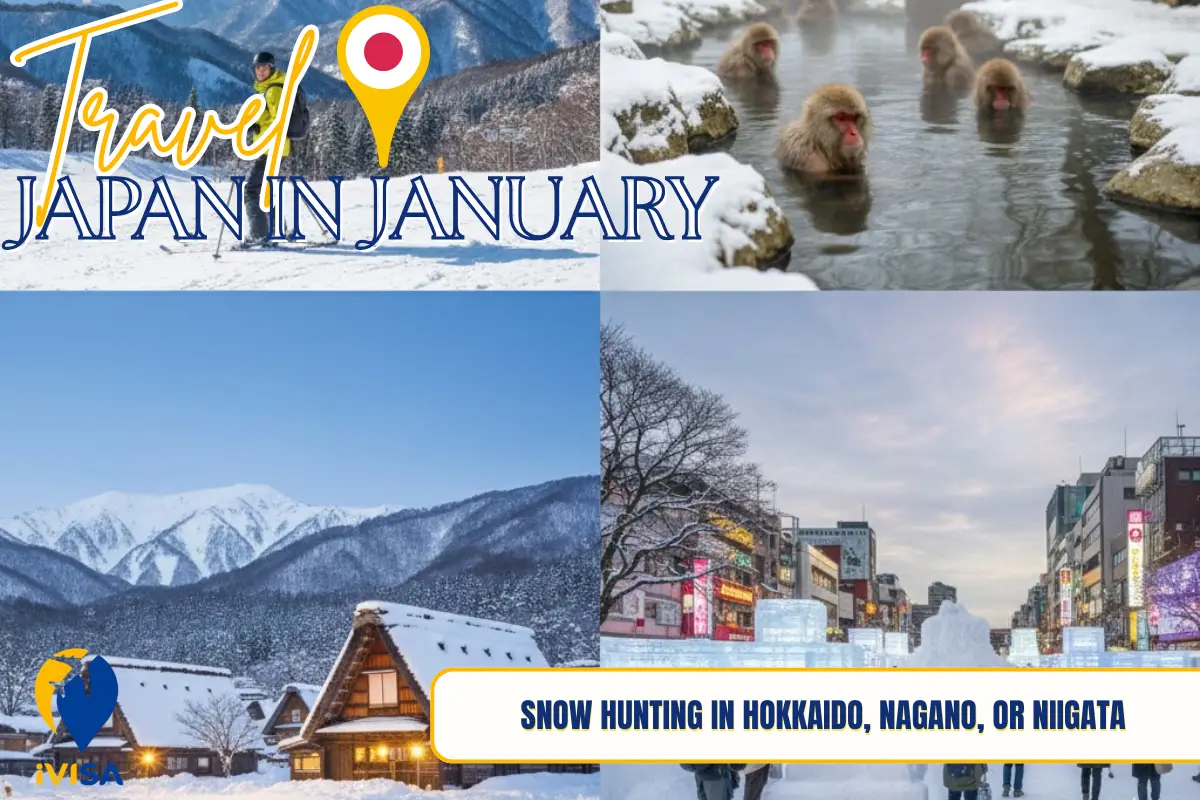
Snow hunting in Hokkaido, Nagano, or Niigata
If snow and winter sports are your goals, Hokkaido, Nagano, and Niigata are standout destinations. In January, snow depth can reach 1-3 meters, perfect for skiing and snowboarding. Hokkaido is famous for Niseko, where powder snow dominates, providing smooth and safe skiing conditions.
Nagano and Niigata are more convenient for shorter trips, located just 90-120 minutes from Tokyo by Shinkansen. After outdoor activities, soaking in onsen surrounded by snow is an unforgettable winter highlight.
Sample January Japan itineraries for Vietnamese travelers
When planning a January trip to Japan, choosing an itinerary that matches winter weather and physical stamina is crucial. Below are sample itineraries from iVISA, widely used by travelers for their convenience and balance.
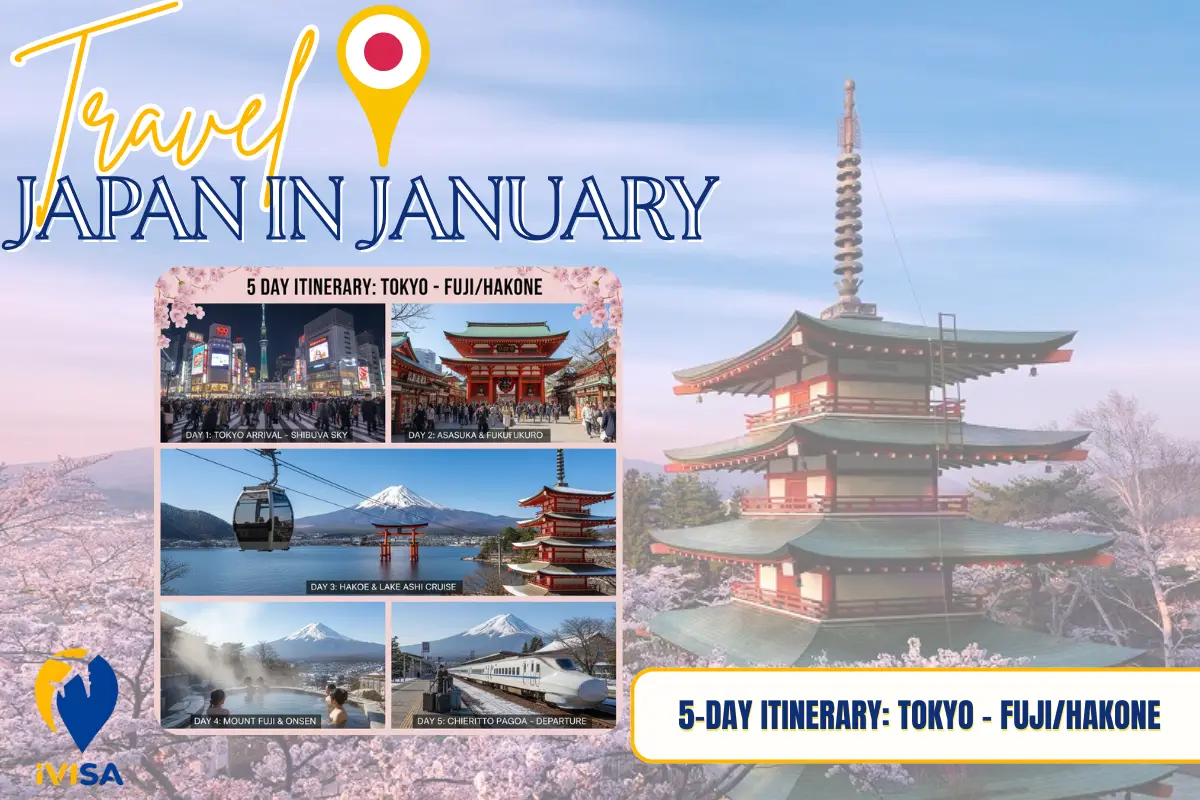
5-day itinerary: Tokyo – Fuji/Hakone
This 5-day itinerary suits first-time visitors or those with limited time who still want a complete experience. On day one, explore Tokyo with visits to Asakusa, Shibuya, and central shopping districts. On day two, spend a full day at Tokyo Disneyland or DisneySea, which operates year-round and features distinctive winter decorations.
Day three is the highlight, traveling to Mount Fuji or Hakone. January’s cold weather enhances snowy scenery, making it ideal for sightseeing and outdoor onsen. On the last two days, combine Kyoto and Osaka—visit Kinkakuji Temple, stroll through Gion, and enjoy Dotonbori’s food scene before flying home from Kansai.
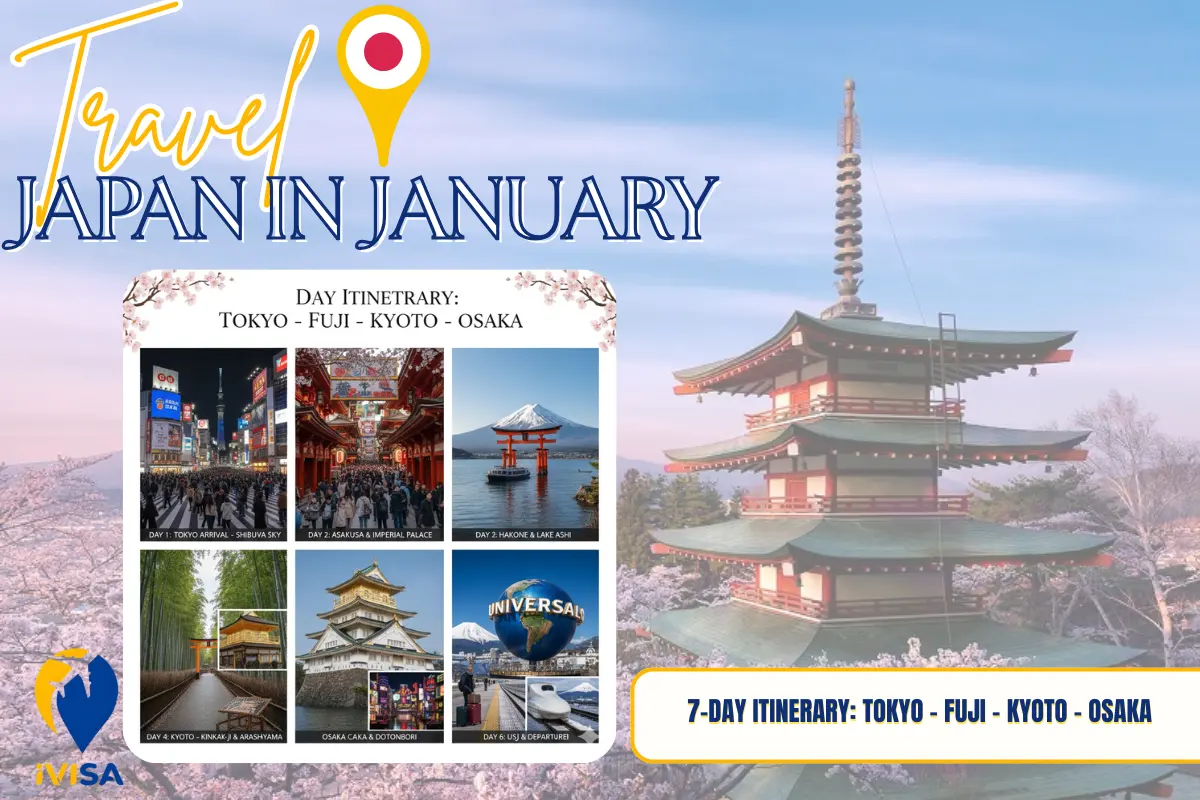
7-day itinerary: Tokyo – Fuji – Kyoto – Osaka
With more time, the 7-day itinerary is a well-balanced option. Spend two days in Tokyo for sightseeing and shopping, one day in Fuji or Hakone for snow and onsen experiences, followed by two days in Kyoto exploring temples and traditional culture. The final two days in Osaka allow you to enjoy food, shopping, and entertainment before concluding your trip.
This itinerary maintains a comfortable pace, suitable for Vietnamese travelers and families. Traveling between cities like Tokyo, Kyoto, and Osaka is easy with the JR Pass, which allows unlimited use of Shinkansen and JR trains. Japan’s punctual and reliable rail system operates smoothly even in winter, helping you save time, effort, and transportation costs.
Cost of traveling to Japan in January from Vietnam
For Vietnamese travelers, travel costs in January are generally more affordable compared to December or summer.
Based on iVISA’s experience travel in Japan, airfare is often the largest expense. By booking early, you can find round-trip Vietnam-Japan flights for around 8-10 million VND, which is a good deal for a 5-7 day trip.
Accommodation in January is also relatively affordable. Budget hotels, hostels, or 2-3 star hotels in major cities like Tokyo, Osaka, or Kyoto typically cost around 5-7 million VND per person for 5-7 nights, suitable for independent travelers.
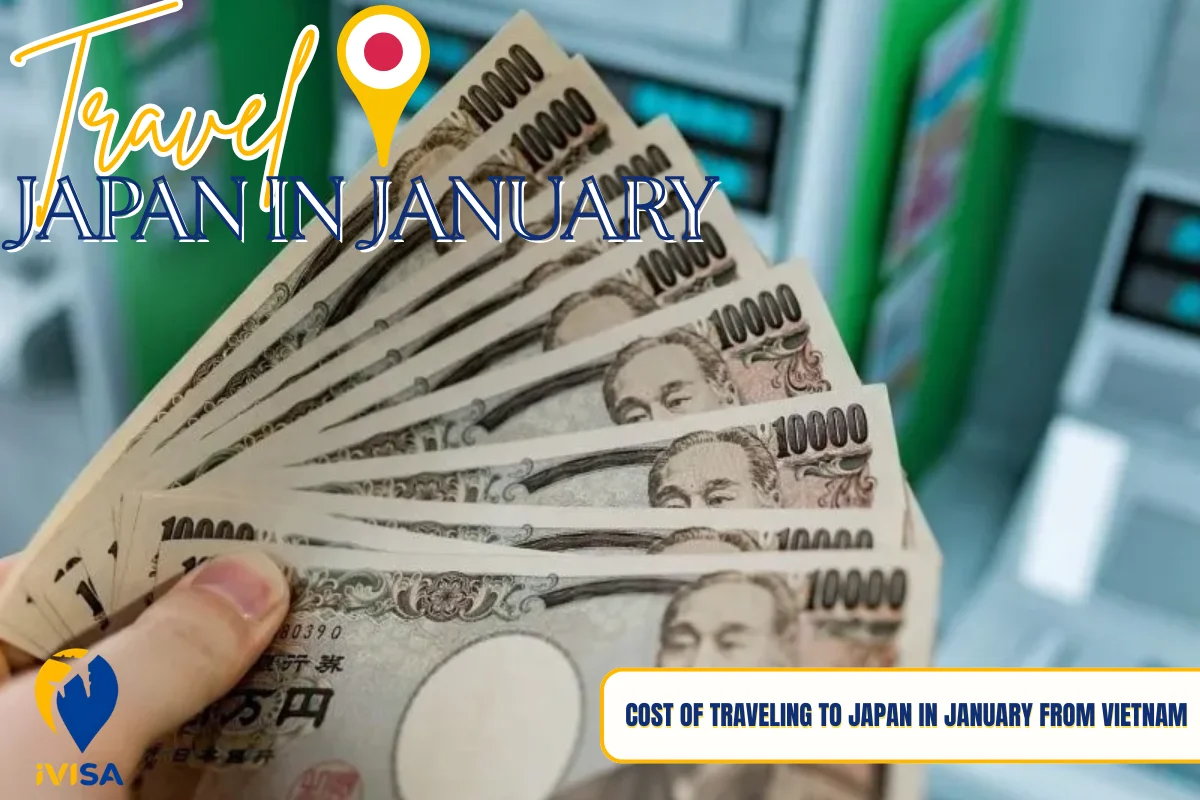
Food costs are manageable if you eat like locals. Common dishes such as ramen, donburi, and oden help keep your budget around 3-5 million VND for the entire trip. If you want to dine at higher-end restaurants or enjoy more varied meals, budgeting 6-8 million VND allows for a more relaxed experience.
Frequently asked questions about traveling to Japan in January
Is traveling to Japan in January cost-effective?
Traveling to Japan in January is considered cost-effective compared to many other times of the year. After the New Year holidays, international visitor numbers drop, causing flight and hotel prices to fall by around 15-30% compared to peak seasons. Booking early helps keep your budget much more manageable.
Does it snow in Tokyo in January?
Snowfall in Tokyo in January is rare and usually light compared to northern regions. The weather is mainly dry and cold, with low temperatures in the morning and at night, and occasional frost. To experience heavy snow, you should travel to areas such as Nagano, Niigata, or Hokkaido.
Is travel insurance necessary for January trips to Japan?
Travel insurance is highly recommended when traveling to Japan in January. Cold weather can cause colds, slips, or disruptions to transportation, especially for independent travelers. Insurance provides peace of mind in case of medical expenses, minor accidents, or trip delays and cancellations due to weather.
After reading iVISA’s insights, are you ready to plan a January trip to Japan? If you want a smooth journey starting from the visa application process, feel free to contact iVISA for full support and peace of mind while preparing for your adventure to Japan.
iVISA Property & Citizenship
- Add: Số 99 Nguyễn Thị Nhung, phường Hiệp Bình, TPHCM
- Hotline: 0937 999 610
- Email: info.ivisatravel@gmail.com
