


 Dubai Tourist Visa
 China Tourist Visa
 South Korea Tourist Visa
 Japan Tourist Visa
 Taiwan Tourist Visa
 Hong Kong Tourist Visa
 Golden Visa UAE
January is the time when China wears its characteristic winter beauty, with white snow, lively festivals, and the Lunar New Year atmosphere approaching. Traveling to China in January offers opportunities to admire majestic snow-covered landscapes, experience skiing in Harbin, or stroll through ancient streets illuminated with lanterns. Let’s explore all these experiences with iVISA in the article below!
Is traveling to China in January suitable for you?
If you are considering traveling to China in January, you might wonder: is the weather too cold? Should you choose snowy mountains or warmer cities? To determine if January is suitable for you, ask yourself:
- How much cold can you tolerate?
- What is the goal of your trip?
- Are you traveling with a tour or independently in China?

Why is January a special time to travel to China?
Did you know that about 70-80% of China’s major ice and snow festivals take place in January, from Harbin to Harbin? This is an ideal time for independent travel in China, when the North and Northeast are covered in snow, while the South remains pleasantly cool, suitable for those not accustomed to cold.
Traveling at this time, you will experience the pre-Lunar New Year atmosphere, with streets decorated with lanterns, firecrackers, and the scent of hot tea. At the same time, you can enjoy Chinese culinary culture through spicy hotpots, steamed buns, and traditional New Year dishes.

If you travel 10-15 days before Lunar New Year, you will avoid crowds, costs remain reasonable, and you will have enough time to fully experience white snow, ice festivals, and unique traditional culture. This is an excellent period for independent travel in China and to capture unforgettable experiences.
Who is January suitable for?
If you love snow and want to experience winter festivals, Northern and Northeastern China are ideal. In Harbin or Harbin, temperatures can drop to -20°C, but you can still participate in ice festivals, ski, and admire unique ice sculptures, making traveling to China in January memorable.
If you are traveling with a partner or friends, central ancient towns such as Zhangjiajie, Fenghuang Ancient Town, or Lijiang have light snowfall and mist surrounding traditional rooftops, perfect for photography and enjoying a peaceful atmosphere.

If traveling with a family with children or elderly, Southern China, such as Guangzhou, Hong Kong, or Sanya, maintains temperatures around 15-20°C, convenient for sightseeing, relaxation, and exploring without worrying about the cold.
Choosing the right region will make you see that January is not only a cold winter season but also an opportunity to experience independent travel in China, enjoy white snow, vibrant festivals, and distinctive Lunar New Year culture.
What is the weather like in China in January?
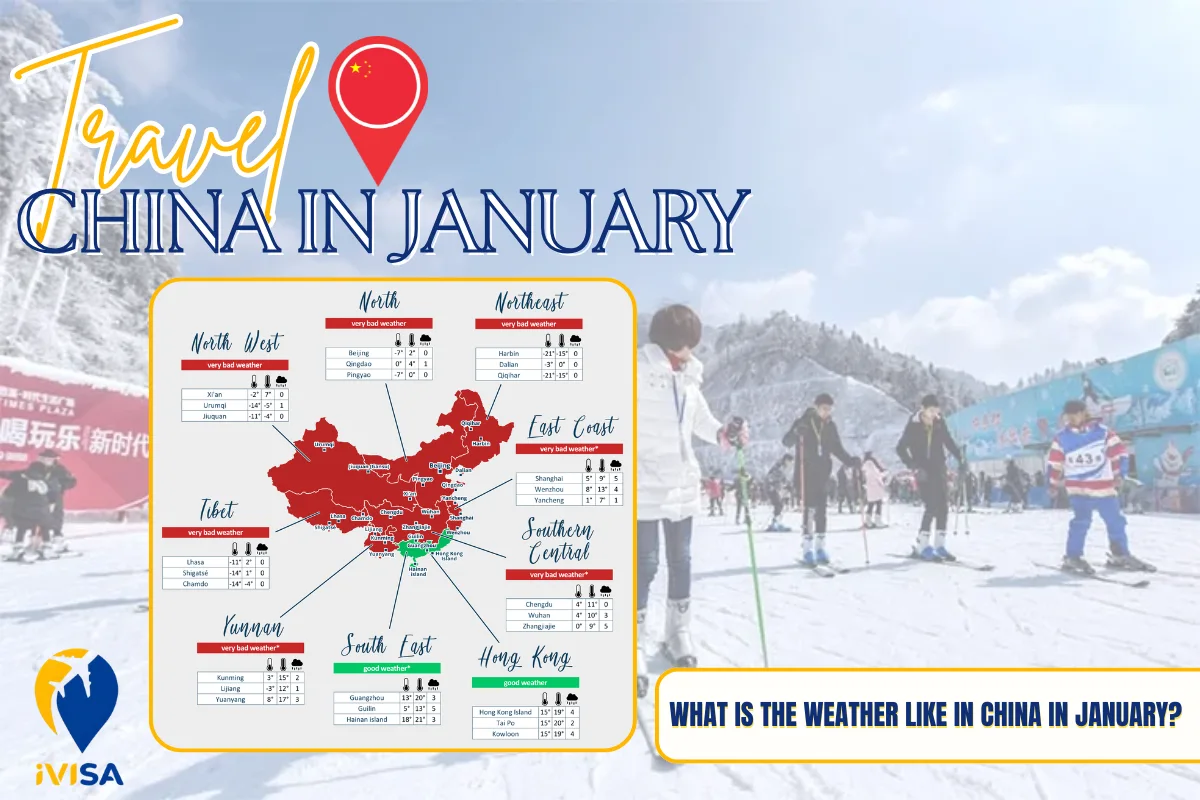
Did you know the average temperature in Beijing in January ranges from -5 to 5°C, while in Harbin, Northeast China, it can drop to -25°C? Compared to Hanoi or Ho Chi Minh City, where the same period is usually 15-20°C, winter cold in China is truly different. Central regions like Hangzhou or Zhangjiajie are only 0-10°C, but high humidity makes you feel colder than in the dry North.
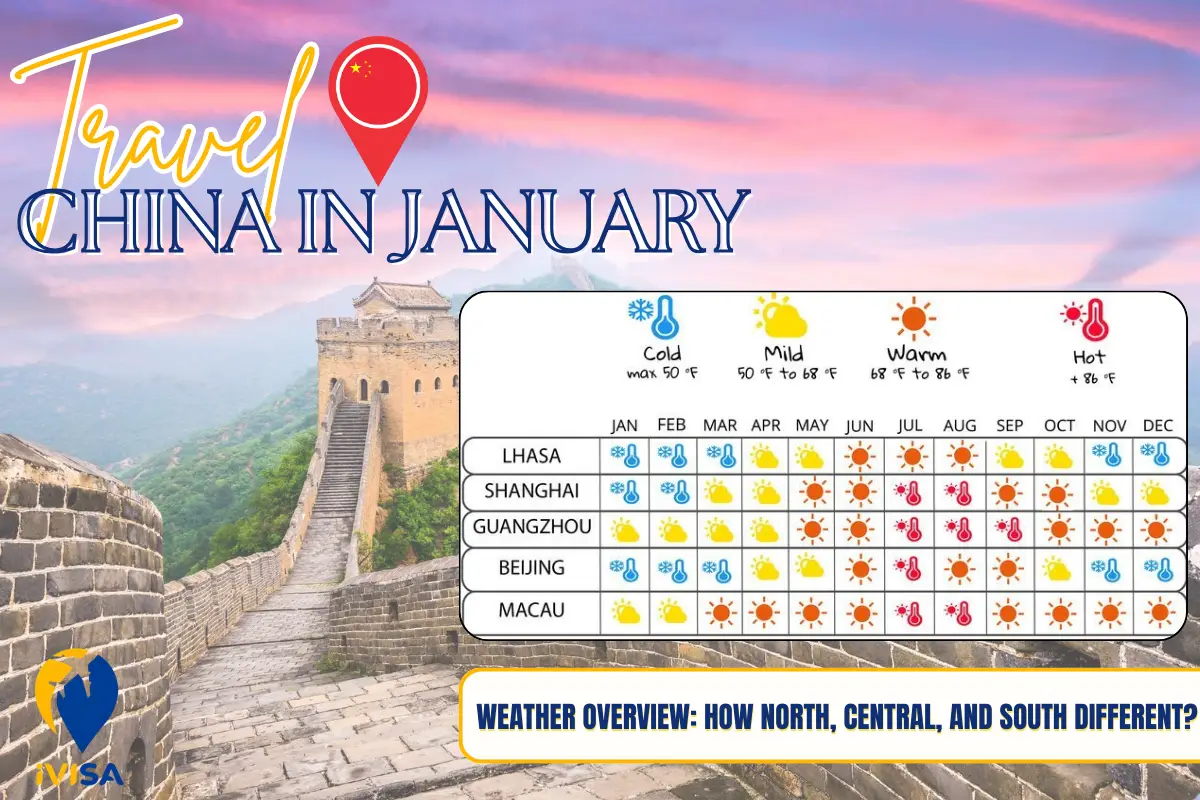
Weather overview: How North, Central, and South different?
You can imagine winter in China as a three-region picture with different shades. In the North and Northeast, January temperatures range from -15 to 5°C, dry and windy, with snow covering mountains and streets. Every step feels like walking into a winter movie, and every photo becomes a vivid postcard.
In Central China, from Hangzhou to Zhangjiajie, average temperatures range from 0-10°C, but high humidity makes it feel colder in reality, and hands and feet easily numb when walking. You should prepare warmer jackets than in the dry North.
In contrast, the South, from Guangzhou to Sanya, has a much milder climate. Temperatures range from 18-25°C, pleasant during the day, and you can travel independently without worrying about extreme cold. You will feel Central China chilly, while in the North, a thick winter jacket is enough. This difference creates the unique “winter identity” of each region that you should know before your trip.
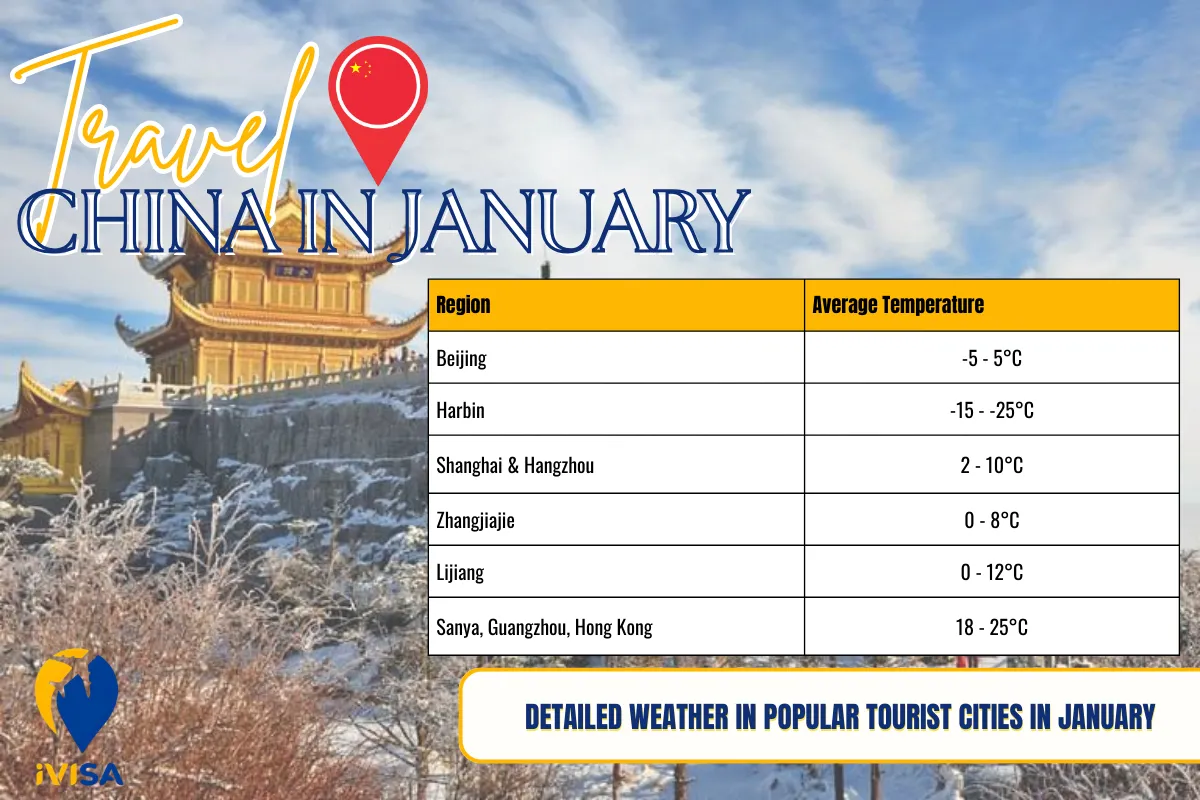
Detailed weather in popular tourist cities in January
According to iVISA’s independent travel experience in China, knowing detailed weather information is essential. This helps you prepare appropriate clothing, plan a reasonable itinerary, and avoid harsh winter conditions disrupting your trip.
| Region | Average Temperature | Actual Feeling |
| Beijing | -5 – 5°C | Dry and cold, snow often falls. Dry sunshine prevents extreme cold and makes moving around easier. |
| Harbin | -15 – -25°C | Strong winds and heavy snow, extremely cold, but a paradise if you want snow hunting and ice festivals. |
| Shanghai & Hangzhou | 2 – 10°C | Damp cold, sometimes feels colder than actual temperature. Moderate warm clothing is enough for sightseeing and photography. |
| Zhangjiajie | 0 – 8°C | Slightly chilly, light snow or none, convenient to explore mountains and winter landscapes. |
| Lijiang | 0 – 12°C | Light cold, clear skies, suitable for visiting ancient towns and photography without too much difficulty. |
| Sanya, Guangzhou, Hong Kong | 18 – 25°C | Comfortable during the day, mild climate, convenient for families or those avoiding the cold. |
What to wear when traveling to China in January?
The cold in China doesn’t come only from the temperature but also from strong winds, high humidity, and the time spent outdoors. When preparing for a trip to China in January, you might wonder: What should I wear in China? Choosing the right clothing is the first step to staying warm and fully enjoying your trip.
In the North and Northeast, you should wear a thick jacket, anti-slip shoes, gloves, a wool hat, and a scarf. The inner layer should be a thermal top close to your body, the middle layer a sweater or fleece for sufficient warmth, and the outer layer a windproof and waterproof jacket. This combination keeps you warm while staying flexible for sightseeing or taking photos in the snow.
Central China is colder and damper, so prioritize a moderately warm jacket combined with a thermal inner layer. Southern China has a milder climate, so a sweater or light jacket is enough to comfortably explore the streets and enjoy the local culinary culture without worrying about the cold. Proper clothing preparation will help you confidently experience traveling in China in January to the fullest.

Where to go in China in January? Travel suggestions for Vietnamese travelers
Did you know that about 70-80% of China’s major ice and snow festivals take place in January? This is the ideal time to experience Northern snow, explore vibrant festivals in Harbin, or stroll through peaceful ancient towns in Central China. Choosing the right destination will determine your overall experience, helping you enjoy traveling to China in January fully without overcrowding or excessive cold.

Destinations for snow lovers
If you love snow and want to experience an authentic winter, Northern and Northeastern China is a must. Harbin is famous for international ice and snow festivals, where you can admire intricate ice sculptures and participate in winter activities. Beijing in January looks like a movie scene: the Great Wall and Forbidden City covered in pristine snow, completely different from spring or autumn. These destinations are suitable for young, healthy travelers who enjoy strong winter experiences.

Destinations for those seeking tranquility
If you prefer quiet spaces and calm scenery, you can choose ancient towns such as Fenghuang or Lijiang, or explore majestic mountains like Zhangjiajie and Shangri-La. In January, visitor numbers drop about 30-40% compared to peak season, and light mist and snowfall create a magical winter atmosphere. You can take beautiful photos while enjoying nature and traditional culture without extreme cold.

Destinations with milder weather
If you are traveling to China in January but want to avoid the extreme cold of the North, you can choose Southern destinations with mild weather. Sanya, Guangzhou, Hong Kong, or Guilin all have average temperatures from 18-25°C, similar to Hanoi or Ho Chi Minh City. Daytime sun and fresh air make sightseeing, relaxation, city tours, or shopping in China very comfortable.

If traveling with family, especially children or the elderly, these destinations make the trip comfortable and safe. You can still experience Chinese culture, cuisine, and the January atmosphere without the cold interrupting your journey.
Travel costs in China in January
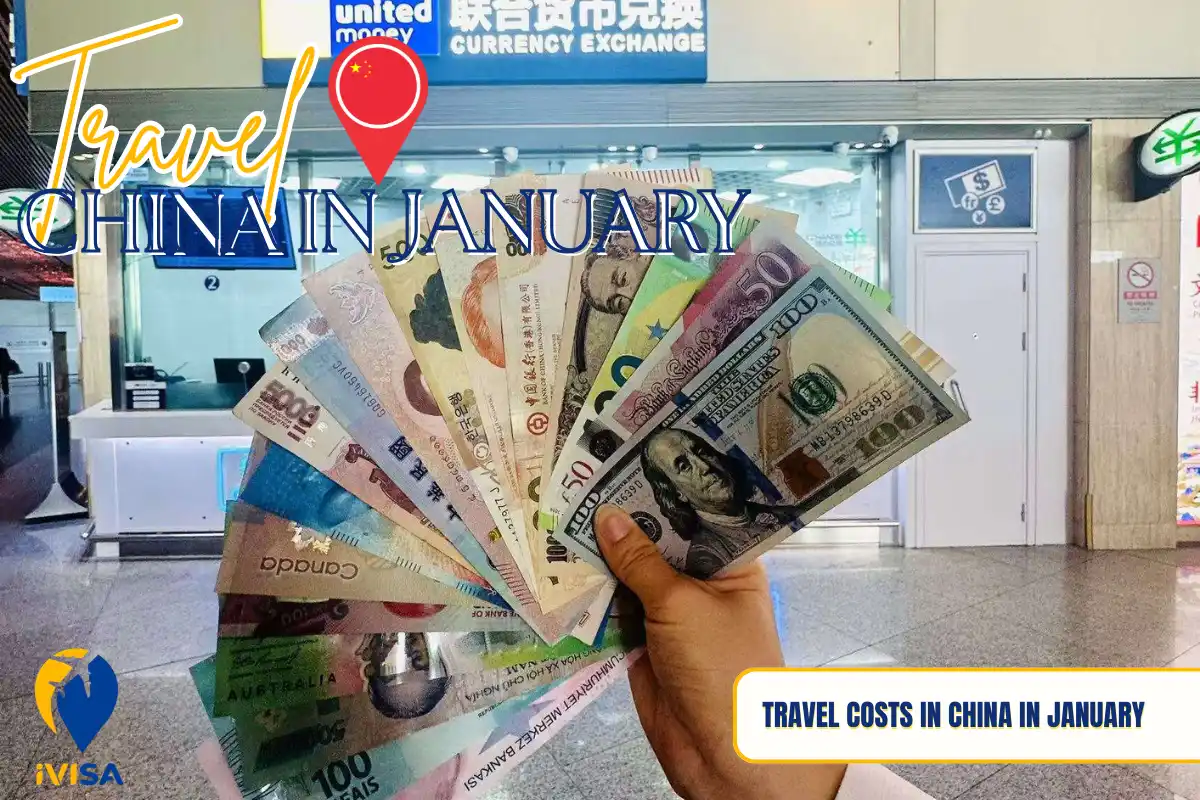
If you plan to travel to China in January, budgeting is essential. Although this month is not yet the peak season, hotel prices and admission fees may rise if you travel without a specific plan.
According to iVISA’s independent travel experience, the average cost for a 5-7 day trip ranges from 15-28 million VND per person. For example, a 5-day experience in Beijing usually costs about 15-22 million VND per person, while a 7-day itinerary from Harbin – Beijing costs around 20-30 million VND per person. For Southern destinations like Sanya or Yunnan, costs range from 18-28 million VND per person, but the climate is much more comfortable than in the North.
To ensure a smooth independent trip, you need to prepare your China tourist visa in advance. Contact iVISA today to get fast, full-package visa support and ensure a complete winter experience in China.
Visa and entry procedures to note
Did you know that the first step determining whether your January trip to China goes smoothly is the visa? Processing time is usually 5-7 working days, but during peak time near Lunar New Year, procedures may take longer and errors may occur. Therefore, choosing iVISA is a smart way to stay confident. iVISA provides full-package China visa services from A-Z, with fast and accurate processing so you won’t worry about confusing documents and procedures.
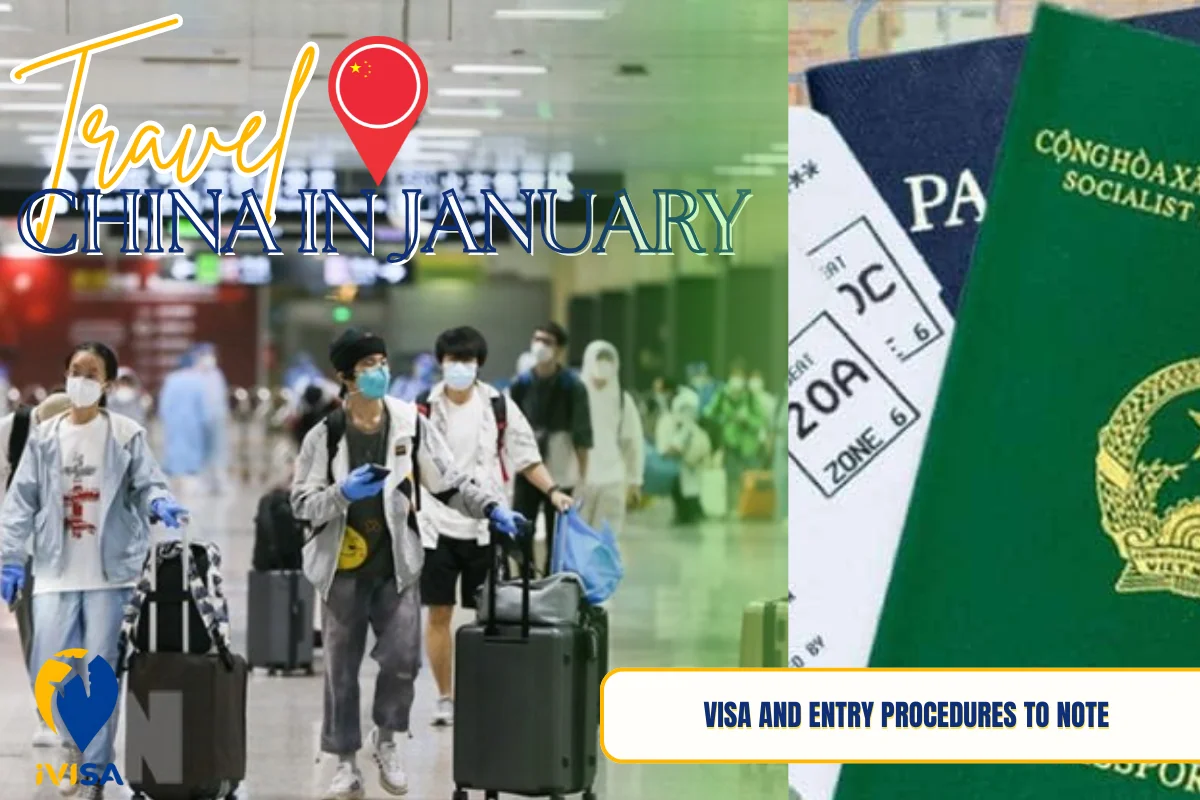
Besides the visa, before going to China, exchange a sufficient amount of cash for necessary expenses. Additionally, using Alipay, WeChat Pay, or international Visa/MasterCard helps you pay quickly and conveniently for shopping, dining, or sightseeing. You should also prepare a SIM or eSIM and install a VPN before your trip. This ensures stable Internet access, easy map lookup, itinerary tracking, emergency contact, or information about tourist spots.
Frequently asked questions about traveling to China in January

Is China too cold in January, and how to dress?
In January, Northern and Northeastern China are very cold, often below 0°C with thick snow. Central China is cold and damp, while Southern China is mild to slightly cold. Dress in three layers: thermal wear close to the body, sweater or fleece in the middle, and windproof jacket outside. Bring gloves, wool hats, scarves, and moisturizer to stay warm and comfortable during sightseeing.
Is there definitely snow in January?
Winter in China usually brings white snow to the North and Northeast, especially Harbin, Beijing, or Changbai Mountains. This period is ideal for enjoying snow-covered landscapes, participating in ice festivals, and skiing.
How to travel between cities in China in January?
In January, China is cold with snow in many areas, but transportation is still convenient thanks to a developed network. High-speed trains connect major cities quickly and efficiently, while intercity buses and domestic flights allow flexibility for long journeys or remote regions.
Do I need to know Chinese for independent travel in January?
You don’t need to know Chinese to travel independently in winter. However, learning basic phrases, using Google Translate, and preparing addresses, hotel info, or tourist spots in Chinese will help you navigate, book tickets, and avoid getting lost in snow or cold weather.
Having read this far, are you ready to travel to China this January? Don’t let paperwork or visa procedures hold you back. Contact iVISA today for full-package visa support and be ready to go. A complete winter journey awaits you!
iVISA Property & Citizenship
- Add: Số 99 Nguyễn Thị Nhung, phường Hiệp Bình, TPHCM
- Hotline: 0937 999 610
- Email: info.ivisatravel@gmail.com
